📑Table of Contents:
- What Makes a Good Cheer Routine Song?
- One Song or a Custom Mix?
- Match Music to Routine Sections
- Clean Lyrics and Audience Fit
- Tempo, Counts, and Choreography
- Voiceovers and Team Branding
- Music for Pep Rally, Sideline, and Halftime Routines
- Music Licensing Rules Teams Should Know
- How to Choose a Cheer Routine Song Step by Step
- Common Mistakes to Avoid
- Final Thoughts
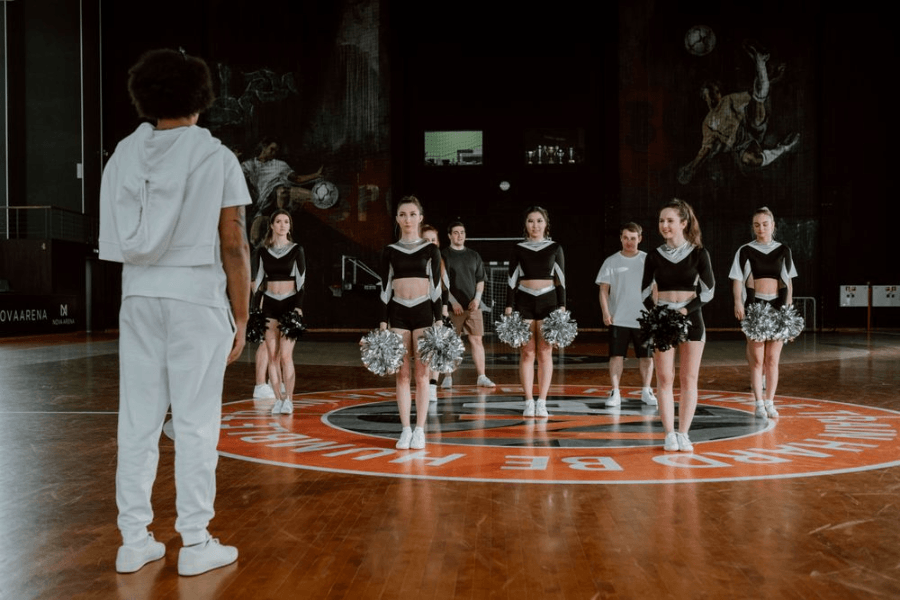
A cheer routine song does more than play in the background. It guides timing, builds energy, supports stunts, highlights jumps, drives tumbling, and helps the crowd understand when to react. A great song can make a routine feel sharp, confident, and memorable. However, the wrong song can make even strong choreography feel messy or disconnected.
Because cheerleading combines athletic skill with performance, music must serve the routine. It should offer clear 8-counts, clean lyrics, useful accents, and enough energy shifts to support different sections. Additionally, teams need to consider licensing before editing, remixing, or performing music at games, school events, or competitions. Therefore, choosing a cheer routine song requires more strategy than simply picking a popular track.
What Makes a Good Cheer Routine Song?
A good cheer routine song starts with a clear beat. Cheerleaders learn choreography in 8-count phrases, so the downbeat needs to feel obvious. If the rhythm changes constantly or hides under busy vocals, athletes may struggle to stay together. However, when the beat stays crisp, the motion looks cleaner, and transitions feel more controlled.
Next, the song needs performance moments. A drum hit can sharpen a jump. A bass drop can highlight a stunt. A vocal shout can introduce a formation change. A big chorus can lift the dance section. As a result, music becomes part of the choreography rather than a separate layer.
Finally, the song should match the team’s identity. A youth squad may need bright, simple, age-appropriate pop. A school team may need crowd-friendly songs with strong spirit energy. Meanwhile, an all-star or competitive team may need a custom mix with voiceovers, transitions, effects, and section-specific sound design.
One Song or a Custom Mix?
Some routines can use a single complete song, especially for short pep rally dances, sideline performances, or simple halftime routines. A single song works best when the choreography stays in a single style and does not require major energy shifts. For example, a short dance routine can use a clean pop song with a strong chorus and steady beat.
However, full cheer routines often need a custom mix. A competition routine may include opening motions, standing tumbling, stunts, jumps, running tumbling, pyramid, dance, and a final pose. One commercial song rarely supports all those sections well. Therefore, coaches often use licensed mixes that combine songs, original beats, effects, and voiceovers.
CheerSounds describes custom cheer mixes as using voiceovers, precision transitions, and strategic energy curves that support stunts, tumbling, dance, and pyramid sections. Its 8 Count Mixer also lets users choose routine duration, drag and drop songs, effects, and voiceovers, match sound effects to choreography, preview the mix, and download it after purchase. This workflow shows why routine music should follow the choreography’s structure.
Match Music to Routine Sections
A cheer routine song or mix should support each section of the performance. The opening needs immediate attention. Stunts need a steady rhythm and clear hits. Jumps need crisp accents. Tumbling needs drive and momentum. Pyramid needs drama and build. Dance needs groove and personality. Finally, the ending needs a strong musical finish.
A simple section guide can help:
- Opening: bold intro, team name, mascot, or chant
- Standing tumbling: sharp rhythm and clean accents
- Stunts: steady tempo with strong hit points
- Jumps: crisp beats that match takeoff and landing
- Running tumbling: faster drive and forward momentum
- Pyramid: rising build or dramatic chorus
- Dance: groove, attitude, and crowd appeal
- Ending: final voiceover, effect, or powerful hit
Additionally, coaches should avoid placing slow or unclear music under difficult skills. Athletes need confidence during high-risk sections. Therefore, the music should make timing easier, not harder.
Clean Lyrics and Audience Fit
Clean lyrics matter in every cheer setting. Teams perform for students, families, administrators, judges, younger children, and community members. Therefore, a song with explicit content, mature themes, insults, or aggressive language can distract from the routine and create complaints.
However, “clean” does not only mean profanity-free. Some radio edits remove explicit words but leave suggestive or inappropriate ideas. Coaches should listen to the full song, including verses, bridges, features, background lines, and ad-libs. Additionally, they should consider the athletes’ ages and the values of the school, gym, or organization.
Good cheer routine themes include confidence, teamwork, resilience, victory, celebration, school pride, leadership, and joy. Meanwhile, songs built around explicit content or negativity often weaken the team’s image. If a song feels questionable, choose another track or use original cheer music.
Tempo, Counts, and Choreography
Tempo affects how a routine feels. A song that is too slow can drain energy. A song that is too fast can make motions sloppy. Therefore, coaches should test music before finalizing choreography.
Count the song out loud. Then, try basic motions, jumps, and transitions. If athletes rush or fall behind, the tempo may not fit. Additionally, listen for clean 8-count patterns. Some songs sound exciting but include odd phrasing that can confuse dancers and stunt groups.
Moreover, a good routine song should allow breathing room. Cheerleaders need small moments to reset, travel, load stunts, or prepare for tumbling. If the music feels packed with nonstop effects, athletes may look frantic. Consequently, strong music balances energy with control.
Voiceovers and Team Branding
Voiceovers help personalize a cheer routine song. A voiceover can include the team name, mascot, colors, city, school, gym, division, or season theme. It can also introduce a major section, hype a stunt, or create a memorable ending.
However, voiceovers should not overwhelm the music. Too many lines can hide the beat and make the routine harder to count. Therefore, use them at key moments: the opening, a stunt hit, a pyramid build, a dance transition, or a final pose. A short, confident phrase often works better than a long script.
Additionally, voiceovers should match the team’s personality. A youth team may need fun and bright wording. A high school team may want school-spirit language. An all-star team may prefer bold, fierce, or theme-driven lines. When the words fit the athletes, the routine feels more authentic.
Music for Pep Rally, Sideline, and Halftime Routines
Not every cheer routine needs competition-style music. Pep rally routines usually need familiar songs that students recognize quickly. The music should start strong, stay clean, and leave room for crowd interaction. Songs with claps, chants, or big choruses work especially well.
Sideline routines need shorter, punchier tracks. During football or basketball games, cheerleaders may have only a quick timeout or a quarter break. Therefore, the song should create energy immediately. It should also support chants rather than overpower them.
Halftime routines can use more structure. Because teams have more time and space, a halftime song or mix can include an intro, a dance section, a stunt moment, and a final hit. However, transitions must feel smooth. Random song changes can confuse the audience and make choreography look disconnected.
Music Licensing Rules Teams Should Know
Music licensing matters whenever teams perform, compete, edit, or mix songs. USA Cheer explains that its music copyright education initiative helps music producers, coaches, professional members, athletes, and spirit leaders understand U.S. copyright laws for music used in performances, routines, competitions, school events, camps, and related settings. These rules protect artists, promote creativity, and help creators receive compensation.
Varsity Spirit’s music guidelines state that teams may not use popular or third-party recordings without licenses from the owners of both the recordings and the publishing rights, regardless of who sells the music. Additionally, Varsity directs teams to current music-provider directories for cheerleading and dance events.
Therefore, buying a song online or streaming it from an app does not automatically allow a team to cut, remix, mash up, and perform it. Coaches should check event rules early, use approved or properly licensed providers, save receipts, and keep proof of licensing organized.
How to Choose a Cheer Routine Song Step by Step
Start with the routine purpose. Is the performance for a pep rally, sideline, halftime, showcase, or competition? Then, map the sections of the routine. Identify where you need high energy, steady counts, dramatic builds, and danceable grooves.
Next, collect song options and review lyrics. After that, the test includes basic choreography. Then, check licensing requirements before anyone gets attached to the track. If you need a mix, work with a provider or tool that understands cheer timing, voiceovers, transitions, and routine structure.
Finally, test the music through the speakers you will actually use. A track that sounds clear in headphones may sound muddy in a gym or stadium. If the team cannot hear the beat, the song will not support performance.
Common Mistakes to Avoid
Many teams choose a cheer routine song because it is trending. However, viral songs may not support full choreography. Others pick music too late, which forces athletes to relearn counts. Additionally, some teams ignore lyrics, skip licensing checks, or use too many sound effects.
Another common mistake is building choreography before understanding the music. Instead, music and choreography should develop together. When counts, skills, and transitions match the sound, the routine looks more polished.

Final Thoughts
A cheer routine song should help every count, skill, and performance moment feel stronger. The best choices offer clean lyrics, clear rhythm, useful accents, audience-friendly energy, and proper licensing. Additionally, a strong routine song or mix should support stunts, jumps, tumbling, pyramid, dance, and the final pose without distracting from the athletes.
Ultimately, the right music makes the routine easier to perform and more exciting to watch. Choose the song with purpose, test it in practice, confirm licensing, and build choreography around its strongest moments. When the music fits the team, every count hits harder.