📑Table of Contents:
- What Makes a Cheerleading Song “The Best”?
- Best Song Styles for Cheerleading
- Best Cheerleading Songs for Pep Rallies
- Best Cheerleading Songs for Sidelines
- Best Cheerleading Songs for Competition
- Clean Lyrics and Age-Appropriate Choices
- Music Licensing Rules Teams Must Know
- How to Match Songs to Routine Sections
- Voiceovers and Team Branding
- Common Mistakes to Avoid
- Final Thoughts
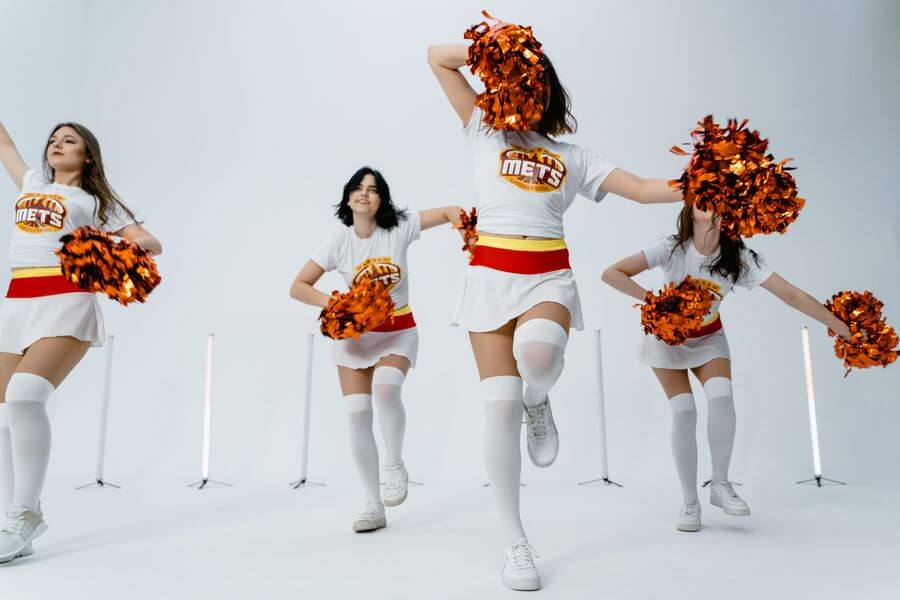
The best cheerleading songs do more than sound upbeat. They help athletes count, stunt, tumble, jump, dance, smile, and connect with the crowd. A great song can make a routine feel sharper and more exciting because it gives the team rhythm, attitude, and confidence. However, a weak song can make even strong choreography feel flat, rushed, or hard to follow.
Because cheerleading blends sport and performance, music must support both precision and energy. Coaches should look for clean lyrics, clear 8-counts, strong accents, and moments that match the routine’s biggest skills. Additionally, teams need to consider age appropriateness, event rules, and music licensing before they finalize a track. Therefore, the best cheerleading songs are not always the newest chart hits. They are the songs that help the team perform better.
What Makes a Cheerleading Song “The Best”?
A strong cheerleading song starts with a clear beat. Cheerleaders learn choreography in 8-count phrases, so the downbeat should feel easy to hear. If the rhythm shifts too often or hides under busy vocals, athletes may struggle to stay synchronized. However, when the music has crisp counts, motions, and transitions look cleaner.
Next, the song should create performance moments. A drum hit can support a jump. A bass drop can highlight a stunt. A rising build can make a pyramid feel dramatic. A catchy chorus can carry a dance section. As a result, music becomes part of the choreography rather than background sound.
Finally, the song should match the team’s image. A youth team may need bright, simple pop. A school team may need crowd-friendly anthems. Meanwhile, an all-star team may want intense hip-hop, EDM, rock, or custom voiceovers. The best song fits the athletes, not just the playlist.
Best Song Styles for Cheerleading
Cheerleading works with many music styles, but some genres appear often because they support movement well. Pop songs bring familiar hooks and broad crowd appeal. Hip-hop adds groove, confidence, and sharpness. EDM creates drops, builds, and high-energy moments for stunts and pyramids. Rock adds stadium power. Funk and disco-pop bring a danceable rhythm. Additionally, Latin pop can add flair and fast movement.
However, one style rarely carries an entire routine well. A great cheer mix often uses contrast. For example, a routine might open with a dramatic intro, move into hip-hop for tumbling, shift into EDM for pyramid, and finish with pop or funk for dance. Consequently, the performance feels dynamic instead of repetitive.
CheerSounds describes custom cheer mixes as using voiceovers, precision transitions, and strategic energy curves that support stunts, tumbling, dance, and pyramid sections. That approach explains why cheer music often needs more structure than a normal playlist.
Best Cheerleading Songs for Pep Rallies
Pep rallies need songs that students recognize quickly. The crowd should clap, sing, chant, or cheer within seconds. Therefore, the best pep rally songs usually have clean lyrics, positive messages, and strong hooks.
Common choices include upbeat pop, stadium rock, and clean hip-hop edits. Songs such as “Can’t Stop the Feeling!” by Justin Timberlake, “Uptown Funk” by Mark Ronson featuring Bruno Mars, “Firework” by Katy Perry, “Shake It Off” by Taylor Swift, “High Hopes” by Panic! At The Disco, “Stronger” by Kelly Clarkson, and “Eye of the Tiger” by Survivor often work well because they feel familiar and energetic.
However, coaches should review the exact version before performance. A radio edit may remove profanity but still contain lines that do not fit a school event. Moreover, pep rally music should leave space for chants, signs, mascots, and crowd callouts. A track with nonstop vocals may make it harder for cheerleaders to lead the room.
Best Cheerleading Songs for Sidelines
Sideline songs need quick impact. During football and basketball games, teams may perform during timeouts, quarter breaks, or halftime transitions. As a result, the song should start strong and stay easy to follow.
For football games, stadium rock, drumline-inspired beats, and chant-heavy tracks often work well because they fill a larger space. For basketball games, clean hip-hop, dance-pop, and fast timeout songs can match the gym’s pace. Additionally, songs with claps or repeated phrases help fans participate.
However, sideline music should not overpower the squad. Cheerleaders still need to lead the crowd with voices, signs, and motions. Therefore, simple rhythms often work better than tracks with crowded production. If fans cannot hear the cheer, the song is not helping.
Best Cheerleading Songs for Competition
Competition cheer usually requires a custom mix rather than one full song. A routine includes opening motions, standing tumbling, stunts, jumps, running tumbling, pyramid, dance, and a final pose. One radio track rarely supports all those sections well.
A custom mix can combine licensed songs, original beats, voiceovers, sound effects, and transitions. CheerSounds’ 8 Count Mixer, for example, lets users choose the routine duration, drag-and-drop songs, effects, and voiceovers, match sound effects to choreography, preview the mix, and download it after purchase. Therefore, competition music often starts with choreography and 8-count planning rather than a favorite song.
Still, popular songs can inspire a competition mix. A bold chorus may work for dance. A dramatic build may support a pyramid. A sharp instrumental section may help jumps. The key is to use musical moments that serve the routine.
Clean Lyrics and Age-Appropriate Choices
Clean lyrics matter in every cheer setting. Teams perform for families, judges, students, administrators, younger children, and community members. Therefore, a song with inappropriate themes can distract athletes and lead to complaints.
Coaches should listen to every verse, bridge, featured part, and background line. Some songs have clean choruses but questionable verses. Others include slang or mature references that do not fit youth or school events. As a result, “clean” should mean both profanity-free and audience-appropriate.
Good themes include confidence, teamwork, strength, resilience, celebration, school pride, leadership, and winning. Meanwhile, songs centered on explicit content, insults, violence, or heavy partying can weaken the team’s image. When in doubt, choose a safer track or use original cheer music from a reputable provider.
Music Licensing Rules Teams Must Know
Music licensing can decide whether a cheer routine qualifies for an event. USA Cheer explains that its music copyright education initiative helps coaches, athletes, spirit leaders, music producers, and event organizers understand U.S. copyright laws for performances, routines, competitions, school events, and camps. It also notes that copyright laws protect artists, promote creativity, and help creators receive compensation.
Varsity Spirit’s music guidelines state that teams may not use popular or third-party recordings without licenses from the owners of both the recordings and the publishing rights. The guidelines also require teams to provide proof of licensing during event registration. Additionally, Varsity’s PDF warns teams not to use unauthorized mashups or distribute recordings they legally purchased.
Therefore, buying a song online or streaming it from a music app does not automatically allow a team to edit, remix, and perform it at a competition. Coaches should save receipts, use reputable providers, and review event rules early.
How to Match Songs to Routine Sections
The best cheerleading songs support each section of a routine. The opening needs immediate confidence. Stunts need steady rhythm and clear hit points. Tumbling needs speed and drive. Jumps need crisp accents. Pyramid needs building and drama. Dance needs groove and personality. Finally, the ending needs a powerful final hit.
A simple guide looks like this:
- Opening: bold intro, chant, or confident hook
- Standing tumbling: sharp beat with clean accents
- Stunts: steady rhythm and strong musical hits
- Running tumbling: fast hip-hop, rock, EDM, or pop
- Jumps: simple countable beats
- Pyramid: dramatic build or big chorus
- Dance: pop, funk, hip-hop, Latin pop, or disco groove
- Ending: final voiceover, effect, or strongest hook
Additionally, teams should test songs during practice. If athletes cannot hear the count, the song needs a different edit. If the energy drops too early, the routine may need a stronger transition.
Voiceovers and Team Branding
Voiceovers help make cheerleading songs feel custom. A voiceover can mention the team name, mascot, colors, city, gym, school, or season theme. It can also add confidence before a major skill section.
However, voiceovers should not crowd the music. Too many lines can make the mix noisy and hard to count. Therefore, use them at important moments: the opening, a stunt hit, a pyramid build, a dance transition, or a final pose.
Sound effects can also help. A bass hit can emphasize a stunt. A clap can sharpen jumps. A whoosh can support a change in formation. Nevertheless, effects should enhance choreography, not cover weak timing.
Common Mistakes to Avoid
Many teams choose songs too late. This creates timing problems because choreography and music should develop together. Another common mistake is choosing tracks only because they are trending. Viral songs may not have clean lyrics, clear counts, or enough performance structure.
Teams also make mistakes when they ignore licensing, use muddy edits, overload mixes with effects, or fail to test tracks on gym speakers. A song that sounds clear in headphones may sound messy in a loud venue. Therefore, test early, review lyrics carefully, and lock the final music before athletes build muscle memory.

Final Thoughts
The best cheerleading songs combine clean lyrics, strong beats, clear 8-counts, crowd energy, routine structure, and proper licensing. They help athletes perform with confidence while giving the audience clear moments to react. Additionally, custom mixes can make stunts, tumbling, jumps, pyramids, dance, and endings feel more polished.
Ultimately, the best song is the one that makes the team look stronger. Choose music that fits the event, age group, choreography, and team identity. Then, review the lyrics, confirm licensing, test the track, and build the routine around clear musical moments. When the music supports the athletes, every count feels sharper, and every performance becomes more memorable.