📑Table of Contents:
- What Are Cheer Mashups?
- Why Cheerleading Teams Use Mashups
- What Goes Into A Cheer Mashup?
- How Eight-Counts Shape Cheer Mashups
- Custom Cheer Mashups Vs. Premade Mixes
- How To Choose The Right Cheer Mashup
- Music Licensing Matters For Cheer Mashups
- How Cheer Mashups Improve Performance
- Common Mistakes When Creating Cheer Mashups
- What Makes A Great Cheer Mashup?
- Final Thoughts
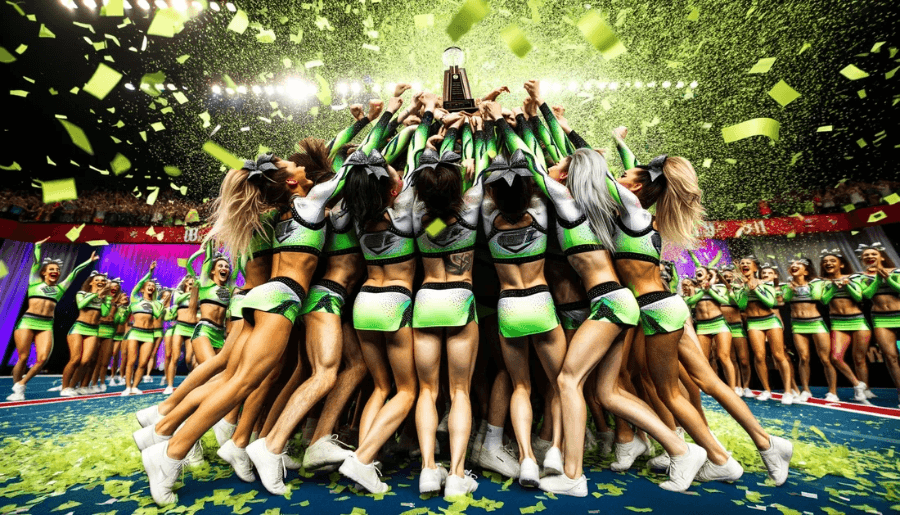
Cheer mashups play a major role in competitive cheerleading. A strong mix does more than combine several songs—it helps athletes hit stunts, emphasize tumbling passes, strengthen transitions, and create memorable moments throughout a routine.
Unlike a standard playlist, a cheer mashup typically blends music, original vocals, sound effects, beats, and custom voiceovers into a single continuous track. Moreover, producers often structure the music around the routine’s counts, which allows choreography and sound to work together.
As competitive cheer has evolved, so has its music. Modern mixes can sound polished enough for commercial release while still serving a practical purpose on the competition floor. Therefore, understanding how cheer mashups work can help athletes, coaches, and teams choose music that strengthens their entire performance.
What Are Cheer Mashups?
Cheer mashups are specially edited music tracks designed for cheerleading routines. Producers combine multiple musical sections, transitions, effects, vocals, and rhythmic elements to create one continuous performance mix.
However, a cheer mashup is more than simply putting several songs together. Every section usually connects to a specific part of the routine.
For example, a powerful beat drop might accompany a tumbling pass. Meanwhile, a dramatic pause can emphasize the moment a stunt reaches full extension. Likewise, a voiceover can introduce the team just before an important visual sequence.
Therefore, successful cheer mashups function almost like musical choreography.
The mix supports what happens on the floor while also creating energy for spectators and judges.
Why Cheerleading Teams Use Mashups
Competitive cheer routines move quickly. Athletes transition between jumps, tumbling, stunts, dance sections, pyramids, and other skills within a limited amount of time.
Consequently, one conventional song may not provide enough musical variation for every section.
A cheer mashup solves that problem by changing intensity throughout the routine. Fast percussion can support tumbling, while stronger bass may emphasize stunt sequences. Additionally, a dance section might introduce a completely different rhythm before transitioning back into a high-energy finish.
Mashups also allow teams to develop a unique identity.
Instead of performing to the same popular song as several competitors, a team can use customized vocals, its name, colors, slogans, or theme. As a result, audiences can recognize the team’s personality immediately.
What Goes Into A Cheer Mashup?
Modern cheerleading music often contains far more than recognizable song sections.
Producers can combine instrumental tracks, vocal elements, custom lyrics, sound effects, percussion, electronic transitions, and spoken voiceovers. Moreover, some competition mixes rely heavily on original music created specifically for cheer.
Sound effects also play an important role.
Hits, impacts, risers, drops, scratches, sweeps, and other effects can emphasize movements in the choreography. However, producers should use them strategically. Too many effects can make a mix sound chaotic and distract from the athletes.
Custom voiceovers provide another popular element. For example, a mix might announce the team name before a stunt sequence or introduce a short phrase connected to the routine’s theme.
Therefore, the best mixes balance personality with clarity.
How Eight-Counts Shape Cheer Mashups
Cheerleading choreography commonly relies on eight-counts, and music production often follows the same structure.
An eight-count gives athletes a predictable rhythmic framework. Consequently, coaches can assign skills to specific moments in the music and rehearse them consistently.
For example, one eight-count might establish a transition. The next could lead into a stunt, while another creates the musical impact for the stunt’s final position.
Moreover, properly structured music makes choreography easier to remember. Athletes begin associating specific sounds with movements rather than relying entirely on verbal counts.
This relationship becomes particularly valuable during competition. Once athletes have practiced hundreds of times with the same mix, a specific effect or musical change can instantly signal what happens next.
Custom Cheer Mashups Vs. Premade Mixes
Teams generally choose between premade cheer music and fully customized mixes.
Premade mixes provide a ready-to-use option. Therefore, they can work well for teams with limited budgets, shorter preparation periods, or less complicated musical requirements.
Custom cheer mashups offer much more control.
A producer can create music around the team’s routine, timing, personality, and competitive division. Additionally, coaches may request specific voiceovers, effects, tempo changes, or musical moods.
However, customization usually requires more planning. Coaches need to clearly communicate the routine’s length, desired style, timing, and revisions.
For competitive programs, the extra preparation can pay off because the music feels connected to the choreography rather than placed underneath it.
How To Choose The Right Cheer Mashup
The loudest or fastest mix does not automatically create the strongest routine.
Instead, coaches should think about the team’s personality and choreography.
A powerful senior team might benefit from aggressive beats and dramatic transitions. Meanwhile, a younger team may perform better with upbeat, playful music that matches its energy.
Additionally, consider how often the sound changes. Constant musical shifts can make a routine exciting, but too many changes may make it difficult to follow.
Strong cheer mashups usually create contrast. Therefore, intense moments feel bigger because quieter or simpler sections surround them.
Most importantly, the music should support the routine rather than compete with it.
Music Licensing Matters For Cheer Mashups
Music licensing has become an important part of competitive cheerleading.
Teams cannot simply download popular songs, combine them into a mashup, and assume they can legally perform that recording at competitions. Copyright rules cover the recordings, compositions, edits, voiceovers, and other elements used in a mix.
Therefore, teams should use properly licensed music and retain documentation that shows they have permission to use it.
Major cheer organizations and competitions may require teams to provide proof of licensing. Additionally, music taken from consumer streaming services does not automatically provide the rights needed to edit songs into competition mashups.
For this reason, many teams work with professional cheer music providers. These producers can supply appropriate documentation alongside the finished mix.
Coaches should always check the current music requirements for each event because competition policies can change.
How Cheer Mashups Improve Performance
Music can influence both the athletes and the audience.
A familiar cue can help athletes anticipate a transition. Likewise, a strong impact sound can encourage performers to hit a stunt sharply and confidently.
Moreover, musical dynamics affect how spectators perceive the routine. When the soundtrack builds toward a major pyramid, the skill can feel even more dramatic.
The final section matters especially. A strong ending combines music and choreography so that the audience immediately understands the routine has reached its peak.
Therefore, producers often save some of the biggest musical elements for the closing sequence.
Common Mistakes When Creating Cheer Mashups
One common mistake involves adding too much.
Teams sometimes request endless sound effects, voiceovers, genre changes, and musical drops to make the mix feel exciting. However, excessive production can make the routine difficult to follow.
Another mistake involves ignoring choreography.
Music created before coaches understand the routine may lack the right moments for stunt hits, tumbling passes, or transitions. Therefore, teams should coordinate music and choreography whenever possible.
Poor audio quality also creates problems. Competition sound systems can expose distortion, uneven volume, weak bass, or badly edited transitions.
Finally, teams should not leave music licensing until the last minute. Proper documentation should form part of the music-selection process from the beginning.
What Makes A Great Cheer Mashup?
The best cheer mashups combine energy, structure, originality, and precision.
First, the music should immediately establish the team’s personality. Next, it should guide the routine through different levels of intensity. Moreover, transitions should sound intentional rather than like unrelated songs placed side by side.
Strong mixes also leave space for important skills.
For example, a producer may simplify the music immediately before a major stunt and then deliver a powerful impact at the exact moment the athletes reach the position. Consequently, the choreography appears even stronger.
Most importantly, a good cheer mashup feels like part of the performance itself.

Final Thoughts
Cheer mashups have evolved into a specialized form of music production tailored to the unique demands of cheerleading.
Rather than simply combining popular songs, today’s strongest mixes use rhythm, eight-counts, original vocals, sound effects, transitions, and customized moments to support specific parts of a routine.
Moreover, good music can strengthen timing, reinforce team identity, and make major skills feel more impressive. However, teams also need to consider audio quality and proper licensing when selecting or creating their competition music.
Ultimately, the best cheer mashup does not overpower the athletes. Instead, it works with them. When choreography and music connect perfectly, every stunt, tumbling pass, dance section, and final pose gains greater impact.