📑Table of Contents:
- What Perioral Dermatitis Actually Is
- Why A Gentle Cleanser Helps
- What To Look For In A Gentle Cleanser
- What To Avoid In A Cleanser
- A Simple Cleansing Routine That Usually Makes Sense
- Should You Moisturize After Cleansing?
- Example Cleanser Types That Often Fit The Brief
- When A Cleanser Is Not Enough
- The Best Mindset: Calm The Skin First
- Final Thoughts
Last updated on June 16th, 2026 at 06:35 pm
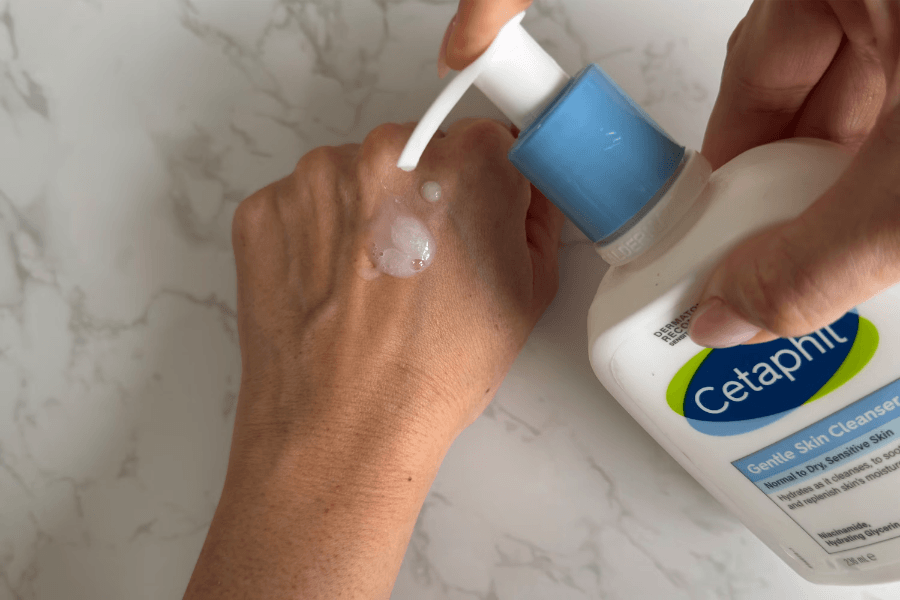
Finding a gentle cleanser for perioral dermatitis can feel surprisingly hard. Many people assume a facial rash needs stronger cleansing, more acne products, or deeper exfoliation. However, perioral dermatitis usually worsens when skincare becomes more aggressive. The American Academy of Dermatology says perioral dermatitis may be triggered by skin irritants, such as skincare products or toothpaste, and the Cleveland Clinic lists moisturizers and heavy face creams among common contributors. Therefore, the first goal is not “treat harder.” The first goal is to stop irritating the skin barrier.
That is why the choice of cleanser matters so much. A good cleanser will not cure perioral dermatitis on its own. Yet it can reduce friction, avoid extra stinging, and support whatever treatment plan your dermatologist recommends.
On the other hand, the wrong cleanser can keep the rash angry for weeks. Therefore, the best cleanser for perioral dermatitis is usually not the most “active” one. It is the one that cleans gently, rinses cleanly, and leaves the skin as undisturbed as possible.
What Perioral Dermatitis Actually Is
Perioral dermatitis is a facial rash that often appears around the mouth and can also involve the nose and eyes. It commonly appears as small red or skin-colored bumps, with dryness, flaking, burning, or itching. The American Academy of Dermatology and the Cleveland Clinic both describe it as a rash that can resemble acne, which is one reason many people initially treat it incorrectly. However, acne-style products often irritate it further instead of calming it down.
Additionally, the condition often has a pattern of triggers. AAD notes that prolonged use of topical corticosteroids is a common cause, while the Cleveland Clinic also lists heavy face creams, fluorinated toothpaste, steroid inhalers or sprays, and other barrier-disrupting factors as possible contributors. Therefore, cleanser advice only makes sense when viewed inside the bigger picture: perioral dermatitis usually improves when you remove triggers and simplify the whole routine.
Why A Gentle Cleanser Helps
A gentle cleanser helps because perioral dermatitis often involves an irritated skin barrier. When the barrier is already inflamed, anything harsh can worsen burning, tightness, or redness. The AAD’s general face-washing guidance says to use a gentle, non-abrasive cleanser that does not contain alcohol, to wash with fingertips rather than washcloths or scrubs, and to avoid scrubbing because it irritates the skin. Therefore, “gentle” in this context is not marketing language. It is practical skin-barrier protection.
Moreover, gentle cleansing supports the “less is more” principle, which often helps with perioral dermatitis. The Primary Care Dermatology Society says that topical steroids, emollient creams, cosmetic creams, and sunscreens can all worsen perioral dermatitis in some cases.
Consequently, using a mild cleanser is one of the easiest ways to simplify without feeling like you are doing nothing at all. It gives you a clean starting point while avoiding the common mistake of piling on more irritation.
What To Look For In A Gentle Cleanser
The best cleanser for perioral dermatitis usually has a short, simple formula. It should be fragrance-free, non-abrasive, alcohol-free, and easy to rinse off. AAD specifically recommends a gentle, non-abrasive, alcohol-free facial cleanser, and the same organization advises choosing fragrance-free rather than merely “unscented” products to avoid common triggers. Therefore, if a cleanser advertises strong exfoliation, intense clarifying effects, or a heavily fragranced spa feel, it is usually the wrong direction.
Additionally, the texture matters. Creamy or lotion-like cleansers often work better than foaming, squeaky-clean formulas because they tend to cleanse without stripping. For example, the National Eczema Association’s product directory includes a Gentle Skin Cleanser from Galderma that uses glycerin, niacinamide, and panthenol to support hydration and barrier comfort.
That does not mean one product works for everyone. However, it does show the kind of formula profile that often suits sensitive, reactive skin: fewer irritants and more barrier-supportive ingredients.
What To Avoid In A Cleanser
Just as important as what to choose is what to skip. Perioral dermatitis-prone skin often reacts badly to scrubs, exfoliating acids, benzoyl peroxide-style acne washes, alcohol-heavy cleansers, heavily fragranced formulas, and anything that leaves the skin feeling tight or “stripped.” AAD’s cleansing guidance advises against using washcloths, mesh sponges, or scrubbing tools, and its skin-care advice for irritation-prone skin recommends avoiding products such as astringents, toners, and exfoliants. Therefore, the safest cleanser is usually a boring one.
Heavy residue can also be a problem. If a cleanser feels waxy, leaves a thick residue, or seems to require additional products afterward, it may not be the best fit during a flare. Cleveland Clinic and PCDS both note that heavy creams and some moisturizers can aggravate perioral dermatitis. Consequently, the best cleanser should leave skin comfortable, not greasy or stripped.
A Simple Cleansing Routine That Usually Makes Sense
When perioral dermatitis is active, simpler usually works better. Wash with lukewarm, not hot, water. Use fingertips only. Massage a small amount of gentle cleanser over the face without rubbing hard, then rinse thoroughly and pat dry with a soft towel. AAD recommends limiting face washing to twice daily and after sweating, which means more washing is not automatically better. Therefore, if you are cleansing three or four times a day in hopes of “clear” the rash, you may be making it angrier instead.
For some people with very reactive or dry skin, even once-daily cleansing in the evening may be enough, especially if morning washing is making the area sting. AAD’s recent dermatologist guidance says some people with dry or sensitive skin may only need to wash once per day. Consequently, a perioral dermatitis routine should focus on comfort and consistency rather than on maximum product use.
Should You Moisturize After Cleansing?
This is where perioral dermatitis becomes tricky. Many facial rashes improve with more moisturizer, but perioral dermatitis can worsen with certain emollient creams and heavy facial products. PCDS specifically notes that emollient creams, cosmetic creams, and sunscreens can contribute to or worsen it, while the Cleveland Clinic also lists heavy face creams as a possible trigger. Therefore, if you do moisturize, keep it minimal and choose something very plain, fragrance-free, and lightweight rather than rich or heavily occlusive.
However, do not guess forever if everything stings. If your skin feels painfully dry or cracked but every moisturizer seems to worsen the rash, that is a good reason to see a dermatologist. Perioral dermatitis often needs prescription treatment, especially when it lingers. A cleanser can help reduce irritation, but it cannot replace a diagnosis or medical plan.
Example Cleanser Types That Often Fit The Brief
Instead of chasing one magic product, it helps to think in categories. The safest cleanser profile for perioral dermatitis is usually:
- A fragrance-free, creamy cleanser.
- A non-foaming or low-foaming sensitive-skin cleanser.
- An alcohol-free, non-exfoliating wash.
- A formula without scrubbing beads, acids, or acne actives.
One example that fits this general profile is the NEA-listed Gentle Skin Cleanser from Galderma, which includes glycerin, niacinamide, and panthenol and is positioned for sensitive skin. NEA also notes that its Seal of Acceptance indicates a product has been reviewed for suitability for eczema or sensitive skin, though it is not a guarantee that the product will work for everyone. Therefore, seal-style screening can be a helpful shortcut, but patch tolerance still matters.
When A Cleanser Is Not Enough
A gentle cleanser helps support recovery, but perioral dermatitis often needs more than supportive skin care alone. AAD says the rash may clear once triggers are removed, especially if you stop corticosteroids when appropriate, while Cleveland Clinic says treatment may still take weeks and can require prescription options. DermNet also describes periorificial dermatitis as benign but often burdensome enough to need active management. Therefore, if the rash persists, spreads toward the eyes, burns significantly, or keeps returning, medical evaluation makes sense.
This is especially important if you have been using hydrocortisone or any topical steroid on your face. AAD warns that many people develop perioral dermatitis after applying corticosteroids for too long. Yet steroid withdrawal can also briefly worsen the rash before it settles. Consequently, if a steroid is involved, it is smart to get guidance rather than improvising.
The Best Mindset: Calm The Skin First
The biggest mistake people make with perioral dermatitis is treating it like dirt, oil, or stubborn acne. That mindset leads to strong cleansers, frequent washing, exfoliation, and too many treatment steps. However, the better mindset is calmer and more strategic: protect the barrier, remove likely irritants, and let treatment do its job. Therefore, the best gentle cleanser is the one that helps you stop the problem from escalating.
In practical terms, that usually means a fragrance-free, non-abrasive, alcohol-free cleanser with a simple ingredient list and no harsh actives. It also means using your hands rather than scrubbing tools, and washing with lukewarm rather than hot water. Additionally, it means accepting that “barely enough” skin care is often exactly right during a flare.

Final Thoughts
A gentle cleanser for perioral dermatitis should do one job well: clean the skin without giving the rash new reasons to flare. The strongest dermatology guidance points toward gentle, non-abrasive, alcohol-free, fragrance-free cleansing, along with avoiding scrubbing and other irritants. Meanwhile, multiple medical sources note that topical steroids, heavy creams, and certain skin-care products can worsen perioral dermatitis, which is why simplifying your routine matters so much.
If you are choosing a cleanser right now, think soft, plain, and boring. That is usually a good sign. And if the rash keeps coming back, spreads, or refuses to calm down, see a dermatologist, because cleanser choice helps — but treatment often needs to go further than that.