📑Table of Contents:
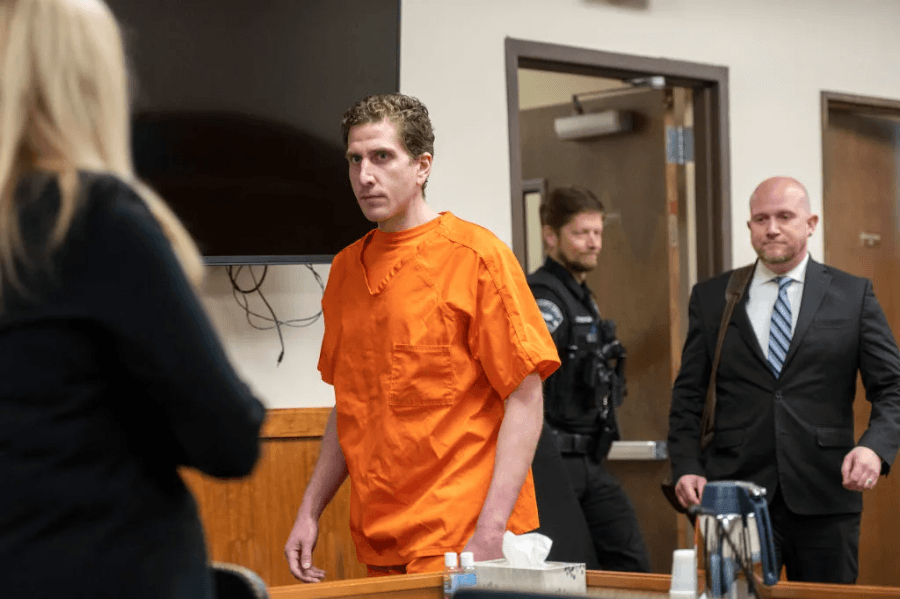
The biggest update on the Idaho murders is no longer about an upcoming trial. It is about finality. Bryan Kohberger, the former criminology Ph.D. student charged in the November 2022 killings of four University of Idaho students, pleaded guilty on July 2, 2025, to four counts of first-degree murder and one count of burglary. Then, on July 23, 2025, an Idaho judge sentenced him to four consecutive life sentences without the possibility of parole, plus 10 years for burglary. Therefore, the case has moved out of the pretrial phase that dominated public attention for years and into a post-sentencing phase defined by documentation, unanswered questions, and long-term aftermath.
That shift matters because for most of 2023, 2024, and the first half of 2025, the public followed the case through arrest records, venue fights, DNA arguments, gag-order disputes, and trial scheduling. Many people still search for “updates” expecting a future court battle. However, there will be no murder trial. Kohberger’s guilty plea ended that possibility and also removed the death penalty from the table.
Consequently, the most useful update today is not a teaser about what might happen next in court. It is a clear explanation of what already happened, what the sentence means, and what major questions still remain unresolved.
The Core Case In Brief
The case began after four University of Idaho students — Madison Mogen, Kaylee Goncalves, Xana Kernodle, and Ethan Chapin — were found stabbed to death in an off-campus rental home in Moscow, Idaho, on November 13, 2022. The killings shocked not only the university community but also the wider country, partly because of the brutality of the crime and partly because the early investigation unfolded under intense national scrutiny.
Investigators later arrested Bryan Kohberger in Pennsylvania in December 2022. Prosecutors said the case against him included DNA from a knife sheath, surveillance footage, cellphone data, and other digital and circumstantial evidence.
For a long time, the case appeared headed toward a full capital murder trial. In April 2025, a judge ruled that prosecutors could continue pursuing the death penalty despite defense arguments tied to Kohberger’s autism diagnosis. Therefore, the legal posture still looked like one of the most high-stakes murder trials in the country. Yet everything changed just weeks before jury proceedings were expected to dominate the summer.
The Plea Deal Changed Everything
The most dramatic update came on July 2, 2025, when Kohberger pleaded guilty. According to AP, PBS, and People’s detailed case timeline, he admitted guilt to the murders and burglary charges in a plea agreement that spared him the death penalty. That agreement meant the state no longer had to prove its case at trial, and it also meant families, the public, and the press would not see a long evidentiary presentation in court. Therefore, the plea brought legal certainty but also cut off one of the public’s main avenues for obtaining fuller answers.
That tradeoff shaped public reaction immediately. Some families supported ending the case without years of appeals and uncertainty. Others were openly upset that the plea removed the possibility of a death sentence and, more importantly, did not require Kohberger to explain why he did it.
Consequently, the plea resolved the question of guilt while intensifying the emotional question of meaning. The legal system got closure on one level, but many relatives and observers felt that the deepest mystery survived intact.
Sentencing Closed The Criminal Case
Three weeks later, on July 23, 2025, the case reached sentencing. AP, PBS, CBS, and other major outlets reported that Judge Steven Hippler sentenced Kohberger to four consecutive life terms without parole and an additional 10 years for burglary. He also faced substantial financial penalties.
During the hearing, families and friends of the victims delivered emotional impact statements, and one surviving roommate spoke publicly for the first time. Kohberger himself declined to explain his motive. Therefore, sentencing gave the victims’ families a formal chance to speak directly, but it still did not provide the answer that many most wanted.
This remains one of the most important current updates because it established the long-term reality of the case: Kohberger will spend the rest of his life in prison. There is no remaining suspense about whether he will be convicted, and there is no ongoing death penalty phase. As a result, most current reporting now focuses less on courtroom uncertainty and more on impact, memory, and the release of previously sealed information.
The Gag Order Was Lifted After The Guilty Plea
Another major update came shortly after the plea, when the judge lifted the sweeping gag order that had restricted public comment in the case for years. AP reporting carried by CBS and ABC said Judge Steven Hippler lifted the nondissemination order on July 17, 2025, because a trial was no longer planned.
Media organizations had pushed for that change, arguing that the original justification — protecting Kohberger’s fair-trial rights — no longer carried the same weight after the guilty plea. Therefore, one of the clearest post-plea shifts was that police, prosecutors, and others could begin speaking more openly.
That development matters because it opened the door to more public detail, even though not everything became instantly available. Some court records remained sealed, and the judge indicated that they would need to be reviewed before release.
Consequently, the end of the gag order did not create total transparency overnight. It did, however, mark a significant change in how much the public could eventually learn about the investigation, the evidence, and the path to the plea deal.
What Still Is Not Known
Despite the guilty plea and life sentence, the central unanswered question remains motive. Kohberger admitted the crimes, but he did not explain why he targeted the victims. AP’s sentencing coverage emphasized that families and observers were left wondering why, and multiple reports noted that the murder weapon still had not been recovered publicly. Therefore, even after conviction and sentencing, the case still contains a disturbing blank space at its center.
That unresolved motive is one reason “Idaho murders updates” continues to trend long after sentencing. Many people are not actually asking whether the case is solved in the legal sense. It is. Instead, they are asking whether the story now makes sense.
At the moment, it still does not in any emotionally satisfying way. The court established responsibility, but it did not establish meaning. Consequently, public attention has persisted because legal closure and narrative closure are not the same thing.
The Families’ Responses Remain Central
One of the strongest continuing themes in the case is the way families of the victims responded both before and after the plea. AP and PBS coverage of sentencing described statements full of grief, anger, disbelief, and, in at least one case, an appeal for Kohberger to finally explain himself. Some relatives criticized the plea deal. Others focused more directly on remembering Madison Mogen, Kaylee Goncalves, Xana Kernodle, and Ethan Chapin as full people whose lives were much bigger than the crime that ended them. Therefore, the emotional center of the story remains with the families, not with Kohberger’s courtroom posture.
That is also why many current updates now include memorial and community angles. The victims’ names remain central in reports, and coverage often emphasizes vigils, foundations, or remembrance efforts alongside legal developments. As a result, the case’s public life has shifted from a pure true-crime fixation toward a more difficult mix of grief, community healing, and institutional memory.
Why People Still Search For Updates In 2026
People still search for Idaho murders updates because the case evolved in stages that were easy to lose track of. First, there was the unsolved homicide phase. Then came the arrest. Then a long pretrial period followed, full of motions and scheduling fights. After that, the plea deal changed everything quickly. Finally, sentencing concluded the criminal prosecution. Therefore, older headlines about a future trial still linger online, and many readers do not realize that the legal story has already ended decisively.
Additionally, the lifting of the gag order breathed new life into the case in the media. Once officials could speak more freely and sealed materials began to draw fresh attention, the public encountered “new” details even though the prosecution itself was finished. Consequently, the case continues to produce updates, but those updates now concern disclosure, aftermath, and unresolved questions rather than trial strategy.
What The Case Means Now
At this point, the Idaho murders case stands as both a resolved prosecution and an unresolved cultural trauma. The state proved its case strongly enough to secure a guilty plea. The defendant is serving four consecutive life sentences without parole. The death penalty is no longer an issue. The gag order has been lifted. Yet the deepest question — why these four students were killed — remains unanswered in public. Therefore, the current phase of the story is no longer about legal suspense. It is about the coexistence of certainty and incompleteness.
That dual reality explains why the case still feels unfinished to many people, even though the criminal matter is effectively over. In formal terms, justice has been imposed. In emotional terms, many survivors, relatives, and observers still do not feel that they understand what happened in a way that allows easy closure. Consequently, updates continue to matter because they are now one of the few remaining ways for the public to learn anything at all.

Final Thoughts
The most important Idaho murder updates are now settled facts. Bryan Kohberger pleaded guilty on July 2, 2025, to murdering Madison Mogen, Kaylee Goncalves, Xana Kernodle, and Ethan Chapin, plus burglary. Then, on July 23, 2025, he received four consecutive life sentences without parole and an additional burglary sentence.
The gag order was lifted on July 17, 2025, which opened the way for more information to emerge after the plea. However, the motive remains unknown, and that absence still shapes how the case is understood.