📑Table of Contents:
- Who Obama’s Daughters Are
- Growing Up In The White House Shaped Everything
- Malia Obama Has Moved Into Film And Creative Work
- Sasha Obama Has Taken A More Private Path
- The Sisters’ Bond Still Matters
- Style And Public Image Have Become Part Of The Story
- Barack And Michelle Obama’s Parenting Still Shapes The Public Narrative
- Why People Still Care So Much
- Final Thoughts
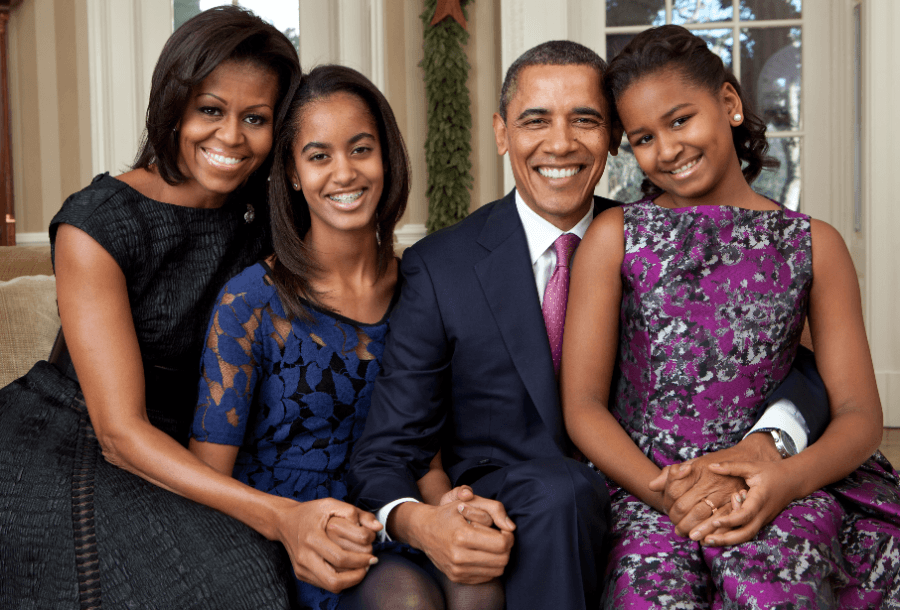
Malia Obama and Sasha Obama have lived in public view for most of their lives. Yet, the most interesting thing about them now is how deliberately they have tried to build adulthood outside the old glare of presidential symbolism. As the daughters of Barack and Michelle Obama, they entered national consciousness as children in the White House. However, they are no longer mainly understood as “the Obama girls” in the narrow political sense. Instead, they have become young women with distinct personalities, educational paths, and emerging adult identities. Therefore, any meaningful look at Obama’s daughters has to move beyond nostalgia and ask what their lives actually look like now.
That shift matters because Malia and Sasha Obama have grown up under a very unusual combination of privilege, pressure, and visibility. Very few children spend their adolescence inside the White House while the country watches them mature in real time. Even fewer manage to transition into adulthood without constantly turning that history into a public brand.
Yet recent reporting suggests that both sisters have tried to do exactly that. They have pursued education, work, and relative privacy while remaining culturally recognizable. Consequently, their story is less about perpetual first-daughter celebrity and more about the effort to become ordinary adults after an extraordinary childhood.
Who Obama’s Daughters Are
Barack and Michelle Obama’s daughters are Malia Ann Obama and Natasha Marian Obama, better known as Sasha. Malia was born in 1998, and Sasha was born in 2001. Over time, they became familiar to the public not just as presidential children but as a sister pair whose personalities and milestones were followed closely by Americans who watched the Obama family for eight years in the White House. Therefore, when people search “Obama’s daughters,” they are usually asking about two related but increasingly separate life stories.
That distinction has become more important with age. As children, the sisters were often treated as a unit. As adults, however, they are easier to understand as two different people navigating similar pressures in different ways.
Michelle Obama has spoken publicly about those differences, describing Sasha and Malia as distinct in temperament and independent in how they learn and move through the world. Consequently, their adult lives have not unfolded as a single shared narrative, even though public fascination still tends to lump them together.
Growing Up In The White House Shaped Everything
The White House years remain the foundation of the public’s understanding of Malia and Sasha Obama. They arrived there as school-age children and grew into teenagers while their father served two terms as president. That environment shaped not only how visible they became but also how carefully they had to be protected. The Obama family consistently tried to preserve a sense of normalcy at school, in friendships, and in family routines, even while living in one of the most secure and symbolically loaded homes in the world. Therefore, their adolescence was both uniquely privileged and unusually constrained.
That tension still affects how people talk about them now. Because the public first knew them as children under intense scrutiny, many Americans still react to them emotionally, almost as if they watched relatives grow up. As a result, each new update about their careers, style, or education gets filtered through the old memory of them as first daughters.
Yet the reality is that both women are now well into adulthood. Consequently, the current story is not really about White House childhood anymore. It is about what comes after it.
Malia Obama Has Moved Into Film And Creative Work
Among the two sisters, Malia Obama has taken the more visible creative route so far. People reported in 2025 that she had already worked in television and film, including on Donald Glover’s Swarm, and that she made her directorial debut with the short film The Heart at the 2024 Sundance Film Festival. The same reporting noted that she used the name “Malia Ann,” drawing on her middle name rather than the Obama surname. Therefore, Malia’s career path suggests a careful attempt to build credibility in creative industries without leaning too heavily on family symbolism.
Her recent work supports that reading. People also reported that Malia directed two Nike social videos tied to A’ja Wilson’s signature shoe launch, framing the project as another milestone in her growing filmmaking career.
Meanwhile, Vogue’s 2025 coverage linked her evolving public style to a “new filmmaking venture,” reinforcing the impression that Malia is entering a recognizable artistic phase rather than being followed as a celebrity daughter. Consequently, Malia’s adult identity is beginning to look less like inherited fame and more like a self-defined creative career in progress.
Sasha Obama Has Taken A More Private Path
Sasha Obama’s public image remains quieter, but that does not mean her path is less significant. People reported in 2025 that Sasha graduated from the University of Southern California in 2023 with a degree in sociology. The same profile described her as confident, funny, and less publicly visible than her older sister in her career development. Therefore, Sasha’s story currently reads as more private and more traditionally civilian, even though public curiosity around her remains strong.
That relative privacy seems intentional and consistent with how the Obama family has spoken about protecting their daughters’ independence. Barack and Michelle have repeatedly emphasized their desire for Malia and Sasha to build adult lives that belong to them, not just to the family name.
As a result, Sasha’s lower-profile path does not suggest absence or drift. Instead, it suggests a different kind of adulthood, one less performative and less publicly narrated. Consequently, she remains culturally interesting not because people know so much, but because they know comparatively little.
The Sisters’ Bond Still Matters
One of the most enduring and appealing parts of the Obama daughters’ story is the bond between Malia and Sasha. People’s 2025 profile stated that the sisters currently live together in Los Angeles, a fact Michelle Obama has spoken about with visible warmth. That detail matters because it changes the emotional shape of their story. Rather than moving into adulthood as two fully separate public figures, they appear to have carried their sibling closeness with them into independent life. Therefore, the sister relationship itself has become one of the strongest organizing themes of their post-White House years.
This shared living arrangement also helps explain why the public continues to think of them as a pair. In many famous families, adult children quickly fragment into distinct brands and isolated media narratives. Malia and Sasha have not entirely done that.
They are clearly different, yet their closeness still shapes how people perceive them. As a result, Obama’s daughters continue to symbolize not only a political family legacy, but also a recognizable sibling dynamic that audiences find grounding and emotionally legible.
Style And Public Image Have Become Part Of The Story
As they have grown older, Malia and Sasha Obama have also become style subjects in their own right, especially Malia. Vogue’s 2025 feature describing Malia as a “queen of Gen Z style” shows how far the public conversation has moved from politics alone. She is now followed not only for her family history or creative work, but also for how she dresses, how she moves through Los Angeles, and how she projects a distinctly contemporary version of post–first-daughter cool. Therefore, fashion and visual identity now play a real role in how the sisters are interpreted.
That said, their style coverage tends to work differently from typical celebrity style stories. It is rarely just about clothes. Instead, it becomes shorthand for independence, generational identity, and self-authorship. When the public watches Malia or Sasha dress casually, appear in a rare family photo, or step out in Los Angeles, the reaction is never only aesthetic.
It is also about how these former White House children are choosing to exist as adults. Consequently, the image in their case remains particularly strongly tied to biography.
Barack And Michelle Obama’s Parenting Still Shapes The Public Narrative
Another reason people stay interested in Obama’s daughters is that Barack and Michelle Obama continue to talk about them in ways that reinforce a larger parenting narrative. People’s 2025 birthday coverage for Sasha showed both parents sharing a rare family photo and publicly expressing pride in the women their daughters have become.
Meanwhile, Michelle Obama’s later podcast reflections on Malia and Sasha’s childhood personalities added texture to the family’s public memory, especially in the way she contrasted Malia’s emotional responsiveness with Sasha’s independent streak. Therefore, the daughters’ story remains inseparable from how their parents frame family life.
That continuing parental presence matters because it keeps the public emotionally connected to the family as a unit. The daughters are adults, but they are still understood as part of a broader Obama family story about values, growth, privacy, and resilience. As a result, every new glimpse of Malia and Sasha is also read as a kind of report card on Barack and Michelle’s parenting. That is not always fair, but it is one reason the interest remains so durable.
Why People Still Care So Much
People still care about Obama’s daughters because they embody a unique blend of familiarity and distance. Millions of Americans watched them grow up, yet relatively little is known about the intimate details of their adult lives. That combination creates lasting fascination. The public feels emotionally invested but also slightly shut out. Therefore, each new update — a short film, a birthday photo, a graduation milestone, a style profile — becomes disproportionately meaningful.
Additionally, Malia and Sasha Obama now function as symbols of what happens after a public childhood. Many famous children struggle under the weight of the identities they inherit. The Obamas’ daughters, by contrast, seem to be moving through adulthood with a level of intention and self-possession that people find reassuring.
They are not trying to replicate their parents’ careers, nor are they rejecting the family legacy through visible rebellion. Instead, they appear to be quietly building lives of their own. Consequently, they remain compelling, in part, because they have handled an impossible inheritance with unusual steadiness.

Final Thoughts
Obama’s daughters are no longer mainly a White House memory. Malia Obama is building a creative career in film and visual storytelling, while Sasha Obama has taken a more private path after graduating from USC. They remain close to each other, close to their parents, and careful about how much of their adulthood becomes public. Therefore, the most accurate way to understand them now is not as children frozen in political nostalgia, but as young women trying to define themselves past it.
Ultimately, that is why people continue to watch them. Malia and Sasha Obama embody a question many people find deeply interesting: what does it look like to grow up in one of the most visible families in the country and still fight for an ordinary, self-made adulthood? Their answer so far seems to be clear, disciplined, and quietly intentional. And that may be the most impressive part of their story.