📑Table of Contents:
- What Is a Tesla Roof Rack?
- How Does a Roof Rack Work on a Tesla?
- What Can You Carry on a Tesla Roof Rack?
- How Much Weight Can a Tesla Roof Rack Carry?
- Does a Roof Rack Affect Tesla Range?
- Roof Rack vs. Roof Rails: What Is the Difference?
- Can You Install a Tesla Roof Rack Yourself?
- Which Tesla Models Can Use a Roof Rack?
- Is a Tesla Roof Rack Worth It?
- What Should You Check Before Buying a Tesla Roof Rack?
- Does the Tesla Roof Rack Damage the Glass Roof?
- Final Thoughts
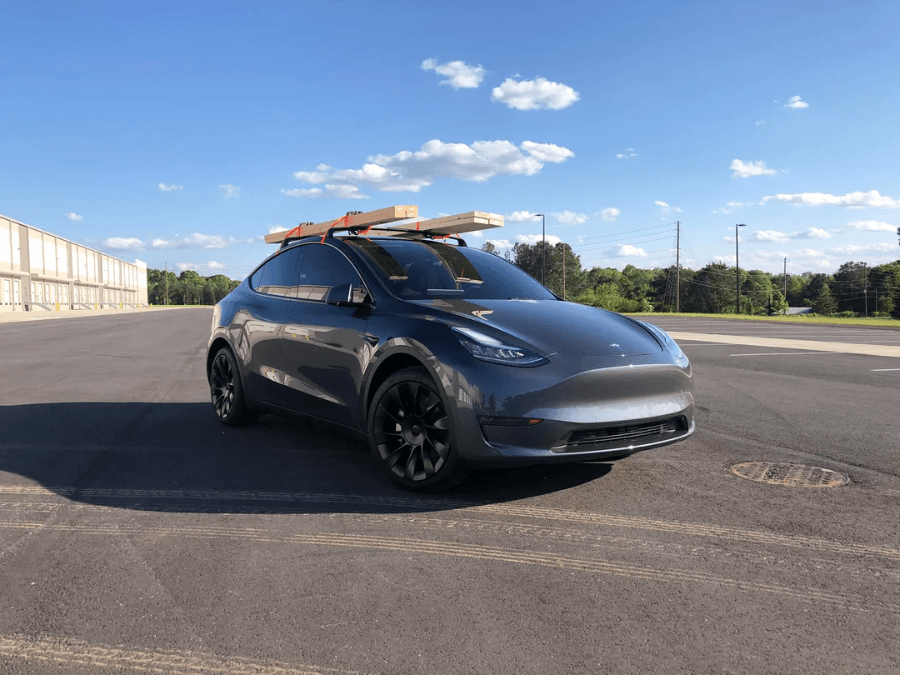
A Tesla offers plenty of storage space, but sometimes the trunk and frunk simply are not enough. If you travel with bicycles, skis, snowboards, camping equipment, or extra luggage, a roof rack can significantly increase the vehicle’s carrying capacity.
So, what is a roof rack on a Tesla? A Tesla roof rack is a set of crossbars that mounts across the vehicle’s roof and provides attachment points for cargo carriers and other accessories. Instead of placing cargo directly on the glass roof, you attach compatible bike racks, ski carriers, cargo boxes, and similar accessories to the crossbars.
However, Tesla designs its vehicles with aerodynamics and efficiency in mind. Therefore, owners need to consider compatibility, weight limits, installation, and range before adding equipment to the roof.
What Is a Tesla Roof Rack?
A Tesla roof rack usually consists of two horizontal crossbars positioned across the width of the vehicle. These bars create a secure mounting platform above the roof.
Unlike a traditional luggage basket, the roof rack itself does not normally hold loose luggage. Instead, it acts as the foundation for another accessory. For example, you can connect a cargo box, bicycle carrier, ski rack, snowboard carrier, or other compatible mounting system.
Tesla’s factory roof racks use aluminum crossbars with mounting channels known as T-slots. Consequently, owners can connect many compatible aftermarket accessories without replacing the main rack. Tesla also incorporates locking towers into its Model 3, Model Y, and compatible Model S roof rack systems.
How Does a Roof Rack Work on a Tesla?
Tesla vehicles have a distinctive glass roof, so installing a roof rack requires more care than on a vehicle with traditional raised roof rails.
The rack attaches at designated mounting locations engineered into the vehicle. Therefore, owners should never simply clamp a universal rack onto the glass or install mounting hardware wherever it appears convenient.
For example, Tesla’s installation procedures specify mounting positions around the roof and require protective materials at those locations. Additionally, Tesla states that Model 3 and Model Y owners should use Tesla-approved roof racks and the appropriate mounting accessories. Improper installation can damage the vehicle.
Once installed, the two crossbars provide a solid base for compatible accessories.
What Can You Carry on a Tesla Roof Rack?
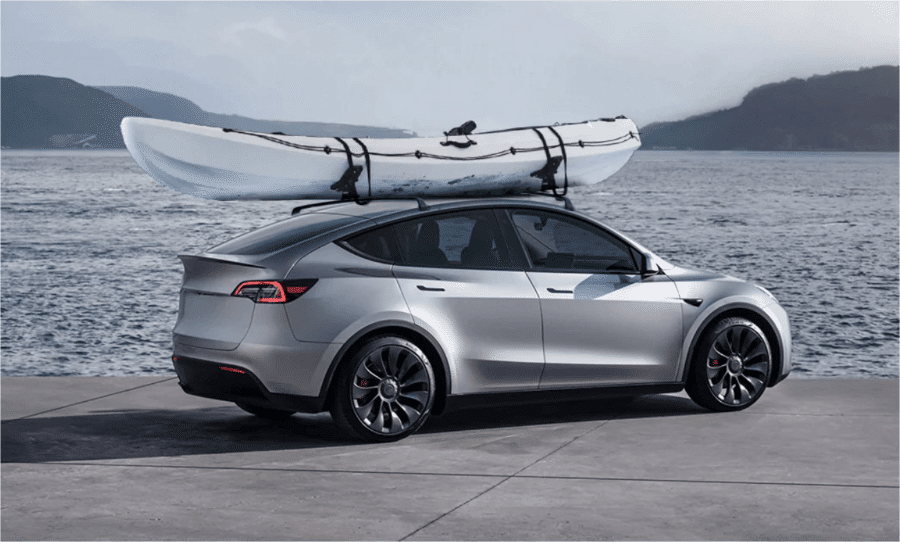
A roof rack can make a Tesla considerably more practical for outdoor activities and long trips. Depending on the accessories you install, you can transport bicycles, skis, snowboards, roof cargo boxes, surfboards, kayaks, and certain camping equipment.
However, the crossbars alone do not automatically secure these items. You still need a compatible carrier designed for the cargo.
For instance, transporting two bicycles generally requires separate bicycle mounts attached to the crossbars. Similarly, luggage normally belongs inside a properly secured aerodynamic cargo box rather than sitting directly on the bars.
Additionally, every accessory adds weight. Therefore, you must calculate the combined weight of the carrier, mounting equipment, and cargo when checking the roof rack’s capacity.
How Much Weight Can a Tesla Roof Rack Carry?
Tesla roof rack capacity varies by vehicle. As of 2026, Tesla lists the following ratings for several of its official systems:
| Tesla Model | Roof Rack Load Rating |
|---|---|
| Model 3 | 150 lb / about 68 kg |
| Model Y | 165 lb / about 75 kg |
| Model S Glass Roof | 150 lb / about 68 kg |
Importantly, these limits include attachments. Therefore, if a Model 3 cargo box and mounting hardware weigh 40 pounds, you cannot simply add another 150 pounds of luggage. The total weight on the rack must remain within the applicable limit.
Furthermore, specifications can vary by vehicle version, market, and accessory. Always check the manual and specifications for your exact Tesla before loading the roof.
Does a Roof Rack Affect Tesla Range?
Yes. A roof rack can affect an electric vehicle’s efficiency because anything mounted above the vehicle changes its aerodynamics.
Tesla designs its official racks to reduce aerodynamic drag, interior noise, and impact on range. Nevertheless, adding a large cargo box, bicycles, kayaks, or other equipment increases air resistance.
Moreover, the effect becomes more noticeable at highway speeds because aerodynamic resistance increases substantially with speed. Therefore, a vehicle carrying bicycles on the roof may consume more energy than the same vehicle traveling at the same speed without external cargo.
The rack itself generally creates less resistance than the equipment mounted to it. Consequently, removing unnecessary cargo accessories when they are not in use can help maximize efficiency.
Roof Rack vs. Roof Rails: What Is the Difference?
Drivers sometimes use “roof rack” and “roof rails” interchangeably, although they describe different components.
Roof rails usually run from the front toward the back of a vehicle. Many SUVs have them permanently installed along both sides of the roof.
Crossbars, meanwhile, run from one side of the vehicle to the other. These bars provide the actual mounting surface for cargo accessories.
Tesla’s Model 3 and Model Y roof rack systems primarily use crossbars attached to designated mounting locations rather than conventional raised rails. As a result, the finished installation looks relatively low-profile and complements the vehicle’s aerodynamic shape.
Can You Install a Tesla Roof Rack Yourself?
In many cases, yes. Tesla provides installation instructions for compatible roof racks, and its Model 3 support documentation specifically states that the system is suitable for home installation.
However, correct positioning matters considerably because the rack sits around a large glass roof panel. Therefore, owners should carefully follow the installation sequence, specified mounting locations, torque requirements, and protective measures.
You should also inspect the rack after installation and periodically during long trips. Cargo creates additional forces during acceleration, braking, cornering, and high-speed driving.
Additionally, distribute cargo evenly whenever possible. Keeping the load balanced and maintaining a low center of gravity can improve vehicle stability.
Which Tesla Models Can Use a Roof Rack?
Model 3 supports Tesla’s roof rack system across its current configurations. Tesla currently states that its Model 3 Roof Rack is compatible with all Model 3 vehicles.
Model Y also supports a dedicated system. However, compatibility can vary by regional model. For example, Tesla’s current U.S. product information lists the Model Y Roof Rack as compatible with Model Y vehicles, except for the Model Y L.
Model S compatibility depends more heavily on the roof configuration and production date. Current Tesla guidance supports glass-roof vehicles produced from February 2019 onward, while some earlier glass-roof vehicles may require a retrofit.
Meanwhile, Model X relies heavily on rear hitch-mounted accessories to carry items such as bicycles and skis. Therefore, owners should verify accessories for their specific Tesla model rather than assuming that a rack designed for another Tesla will fit.
Is a Tesla Roof Rack Worth It?
For owners who frequently carry equipment that does not fit conveniently inside the vehicle, a roof rack can be extremely useful. It expands cargo flexibility without permanently sacrificing passenger or trunk space.
For example, a family can place luggage in a roof box while keeping the trunk available for everyday items. Similarly, cyclists can transport bikes without folding seats or placing dirty equipment inside the cabin.
However, occasional travelers should consider whether they truly need permanent roof-mounted equipment. Extra accessories can create wind noise, add aerodynamic drag, and slightly reduce efficiency.
Therefore, the best approach depends on how frequently you carry oversized equipment.
What Should You Check Before Buying a Tesla Roof Rack?
First, identify your exact Tesla model, production year, and roof configuration. Next, verify that the rack specifically supports that vehicle.
Additionally, check the maximum dynamic load rating and include the weight of every attachment when calculating cargo capacity.
You should also confirm whether your preferred bike carrier, cargo box, ski rack, or other accessory works with the rack’s T-slot system or another compatible mounting method.
Finally, avoid choosing a roof rack purely because it physically appears to fit. Tesla specifically recommends using compatible, approved systems because improper mounting can damage the roof or mounting points.
Does the Tesla Roof Rack Damage the Glass Roof?
A correctly installed compatible rack should use the vehicle’s designated mounting locations rather than placing the cargo load randomly on the glass.
However, incorrect positioning, excessive tightening, overloading, or incompatible hardware can cause damage. Therefore, following the correct installation instructions is especially important for Teslas with panoramic glass roofs.
Owners should also check mounting hardware regularly, especially after installing new cargo or completing long journeys.
Final Thoughts
A Tesla roof rack is a set of aerodynamic crossbars that creates additional mounting space above the vehicle. It allows owners to carry bikes, skis, cargo boxes, outdoor equipment, and other bulky items without filling the cabin or trunk.
However, the rack is only one part of the system. You also need compatible cargo attachments, proper installation, and careful attention to the vehicle’s weight limits.
For many Tesla owners, especially those who travel frequently or enjoy outdoor activities, a roof rack adds valuable flexibility. At the same time, removing unnecessary attachments and keeping loads within Tesla’s specifications can help protect the vehicle, maintain stable handling, and minimize the effect on electric driving range.