📑Table of Contents:
- Decide What Type of Music Bingo You Want to Host
- Build a Strong Music Bingo Playlist
- Create Different Bingo Cards
- Choose Your Winning Patterns
- Prepare the Equipment Before Guests Arrive
- Explain the Rules in Under Two Minutes
- Keep a Master Song List
- How Long Should You Play Each Song?
- Play the Most Recognizable Part of the Song
- Be an Entertaining Host
- Offer Prizes for Each Round
- Plan Around Three or Four Rounds
- Check Music Licensing for Public Events
- Common Music Bingo Mistakes to Avoid
- How to Host Music Bingo Successfully
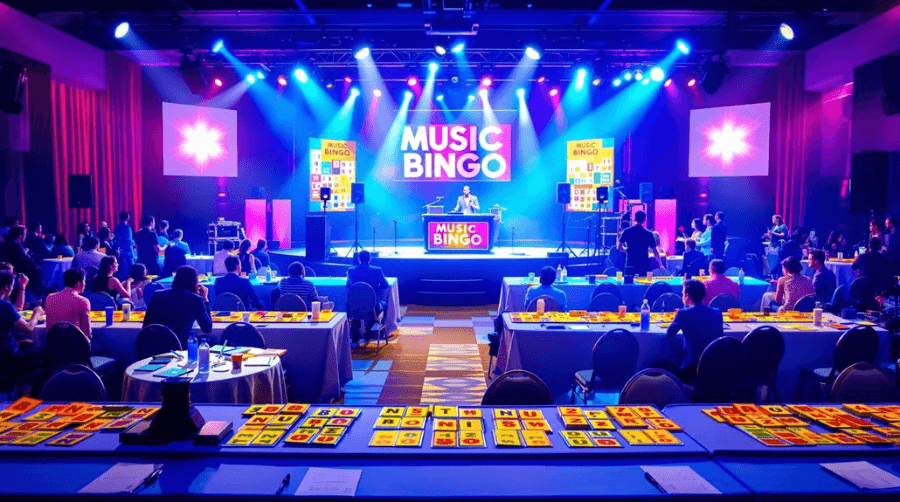
Learning how to host music bingo is surprisingly simple. Players receive bingo cards filled with song titles instead of numbers, while the host plays short music clips. When someone hears a song that appears on their card, they mark the square. The first player to complete the announced pattern wins.
However, a successful music bingo night requires more than pressing shuffle on a playlist.
The best games combine recognizable songs, different cards, clear rules, reliable sound, good pacing, and an energetic host. Moreover, the format works for house parties, bars, restaurants, fundraisers, corporate events, schools, and community gatherings.
Therefore, planning the experience before the first song starts makes a huge difference.
Decide What Type of Music Bingo You Want to Host
Start by choosing the game style.
A mixed-decades playlist works well for a general audience because it gives different age groups something they recognize. However, themed rounds can create even more excitement.
Popular Themes Include:
- 80s hits
- 90s throwbacks
- 2000s pop
- Rock anthems
- Country favorites
- Disco classics
- Movie soundtracks
- One-hit wonders
- Current chart songs
- Holiday music
For example, a bar might run three rounds: 90s hits, 2000s songs, and an all-decades finale.
Meanwhile, a birthday party can build the entire game around music from the guest of honor’s favorite era.
Therefore, choose your audience first and your playlist second.
Build a Strong Music Bingo Playlist
The songs determine whether the game feels exciting or frustrating.
Choose tracks with recognizable intros, choruses, beats, or vocals. Additionally, mix obvious favorites with a few songs that require slightly more thought.
If every track becomes obvious immediately, the game loses some challenge. However, if players recognize almost nothing, participation drops quickly.
A balanced playlist usually works best.
For a standard game, prepare more songs than appear on a single card. If each card includes 24 songs plus a free square, for example, you might build a master pool of 40 to 75 songs.
Consequently, different players can receive different combinations.
That reduces identical winning patterns and makes the game more competitive.
Create Different Bingo Cards
Avoid handing everyone exactly the same card.
Instead, shuffle the song locations so each player receives a different layout.
A typical card uses a 5-by-5 grid with 25 spaces. Many hosts place a free square in the middle, leaving 24 spaces for music.
You Can Fill Those Spaces With:
- Song titles
- Artist names
- Song and artist together
- Albums
- Music categories
For most casual events, song title plus artist offers the easiest format.
However, using artist names alone makes the game more challenging.
Printed cards work well for simple events, while laminated cards allow repeated use. Meanwhile, digital cards can simplify large events by allowing guests to use their phones instead of paper.
Choose Your Winning Patterns
Before each round begins, tell everyone what they need to complete.
For the opening round, keep the pattern simple.
One horizontal, vertical, or diagonal line works perfectly.
Then, increase the difficulty during later rounds.
For example:
| Round | Winning Pattern |
|---|---|
| 1 | One complete line |
| 2 | Four corners |
| 3 | Two complete lines |
| 4 | Full card or blackout |
A full-card round can take considerably longer.
Therefore, it usually works best as the finale rather than the opening game.
You can also experiment with X shapes, T shapes, frames, or other patterns once players understand the basic rules.
Prepare the Equipment Before Guests Arrive
Music bingo does not require complicated equipment.
For a small party, you may only need a phone or laptop, speaker, cards, pens, and playlist.
However, A Larger Venue May Require:
- Laptop or tablet
- Reliable speakers
- Microphone
- Mixer
- Bingo cards
- Markers or pens
- Master song list
- Prizes
- Backup audio connection
Test everything before players arrive.
Moreover, make sure the music reaches every part of the room clearly.
Someone sitting at the back should have the same chance of recognizing a song as someone standing beside the speakers.
Additionally, prepare an offline backup whenever possible in case the internet connection fails.
Explain the Rules in Under Two Minutes
Do not begin playing until everyone understands the game.
Fortunately, the explanation can remain very simple.
Tell players that you will play part of a song. If that song appears on their card, they mark it. Then explain the winning pattern and tell them to call “Bingo!” when they complete it.
Additionally, explain whether you will reveal the title after every clip.
Showing the answer after each song makes the game feel more relaxed. However, keeping titles secret until later makes the round more challenging.
Most importantly, tell players not to clear their cards until you verify the winner.
That rule prevents arguments if someone marks the wrong song.
Keep a Master Song List
The host should track every song played.
This may sound unnecessary at first. However, once someone shouts Bingo, you need a reliable way to confirm the winning card.
Use a spreadsheet, printed sheet, or digital hosting tool.
Then mark each song immediately after playing it.
For example:
- Billie Jean – Michael Jackson
- Flowers – Miley Cyrus
- Dancing Queen – ABBA
- Poker Face – Lady Gaga
When a player claims a win, compare their completed squares with your master list.
Consequently, you can verify the result quickly without trying to remember every song.
How Long Should You Play Each Song?
Short clips keep music bingo moving.
For familiar songs, 10 to 20 seconds may be enough.
Meanwhile, less obvious tracks may need closer to 20 or 30 seconds.
You do not need to use exactly the same length every time.
Instead, play enough of the intro, verse, or chorus for players to recognize the track.
Then leave several seconds before starting the next song.
That pause gives people enough time to search their card and mark the correct square.
Therefore, pacing should feel energetic without becoming rushed.
Play the Most Recognizable Part of the Song
Do not always start at the first second of every track.
Some songs have instantly recognizable intros. However, others take 40 seconds before reaching the section everybody knows.
In those cases, jump directly to a chorus, riff, vocal line, or memorable beat.
For example, a distinctive chorus can work much better than a long instrumental opening.
Moreover, switching between intros and choruses makes the game less predictable.
The goal is recognition rather than testing who can identify obscure opening seconds.
Be an Entertaining Host
A strong host can turn an ordinary playlist into an event.
Keep the energy high, announce each new round clearly, and interact with the room.
However, avoid talking for several minutes between every song.
Quick comments work better.
You might ask who remembers the song, mention the decade, or let the room sing a famous chorus.
Moreover, if everyone suddenly starts dancing or singing, let the track play for a bit longer.
Those spontaneous moments often become the most memorable part of the night.
Nevertheless, keep the overall game moving.
Offer Prizes for Each Round
Prizes increase participation even when they are inexpensive.
Depending on the event, you could offer:
- Gift cards
- Food or drink vouchers
- Candy
- Event merchandise
- Small trophies
- Movie tickets
- Themed gifts
Save the best prize for the final round.
Consequently, players who miss an early win still have something valuable to compete for.
For bars and commercial venues, ensure prize structures comply with applicable local regulations.
Plan Around Three or Four Rounds
Three to four rounds usually provide enough variety without exhausting players.
Start with an easier round, then gradually increase the challenge.
Additionally, change themes between rounds if your playlist allows it.
A sample event might look like this:
- Round 1: 90s and 2000s hits
- Round 2: Rock and pop classics
- Round 3: Current hits
- Round 4: All-decades blackout
This format gives different players opportunities to shine.
Moreover, changing musical styles keeps the room interested.
Check Music Licensing for Public Events
Hosting music bingo at home among friends differs from playing recorded music publicly at a business or commercial event.
Bars, restaurants, breweries, clubs, event venues, and similar businesses may need appropriate public-performance licenses.
Additionally, a personal Spotify, Apple Music, or similar subscription should not automatically be treated as permission for commercial public playback.
Therefore, confirm the venue’s licensing arrangements before hosting a public event.
Requirements vary by country, so commercial hosts should check the relevant rights organizations in their location.
Common Music Bingo Mistakes to Avoid
The easiest mistake is choosing too many obscure tracks.
Additionally, avoid poor-quality speakers, identical cards, confusing patterns, excessively long clips, and long gaps between songs.
Another common problem involves forgetting to record which tracks have already played.
Moreover, do not let players change cards halfway through a round.
Clear rules prevent most disputes.
Therefore, test a miniature version of the game before hosting a large crowd.
Play ten songs, use several sample cards, and see how naturally the game flows.

How to Host Music Bingo Successfully
A successful music bingo night starts with a playlist suited to the audience.
Next, create a variety of cards, choose simple winning patterns, prepare your sound system, and organize a master song list.
During the game, play recognizable sections of each track for roughly 10 to 30 seconds and give players enough time to mark their cards.
Moreover, keep your announcements short, encourage singing, and gradually increase the difficulty across several rounds.
Ultimately, music bingo works because it combines competition with something almost everyone enjoys: recognizing favorite songs.
When players start singing, arguing over song titles, checking their cards, and racing to shout “Bingo,” you know the event is working exactly as intended.