📑Table of Contents:
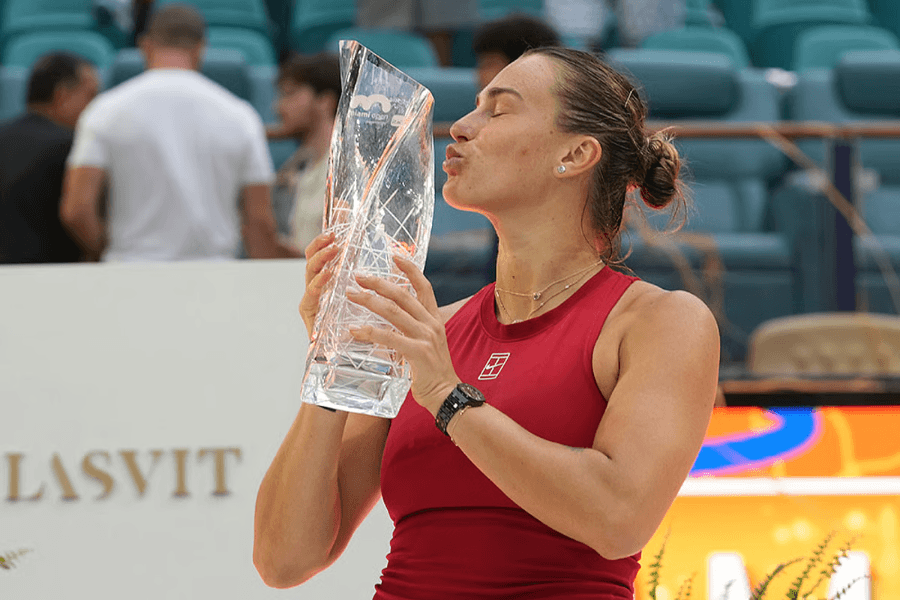
Aryna Sabalenka’s Miami Open 2025 title run gave the WTA season one of its clearest statements of dominance. The world No. 1 arrived in Miami with pressure, expectations, and recent final disappointments, yet she left Hard Rock Stadium with her first Miami Open trophy. More importantly, she won the tournament without dropping a set, which made the victory feel less like a narrow escape and more like a champion reasserting control.
In the final, Sabalenka defeated Jessica Pegula 7-5, 6-2. The scoreline showed her power, but the match also revealed her patience, serving discipline, and improved emotional control. Therefore, her Miami triumph mattered beyond one trophy. It strengthened her hard-court résumé, gave her another WTA 1000 crown, and reminded the tour that her best tennis still sets the standard.
A Long-Awaited Miami Breakthrough
Sabalenka had already won Grand Slam titles and major hard-court events before 2025, but Miami had remained missing from her trophy collection. The tournament carries huge value because it sits at the end of the Sunshine Swing, following Indian Wells, and tests players across heat, humidity, wind, slow hard courts, and deep fields.
Because of those conditions, Miami rarely rewards only one skill. A champion needs power, movement, recovery, patience, and problem-solving. Sabalenka brought all of that in 2025. She did not simply hit through opponents. Instead, she managed points more carefully, used controlled aggression, and stayed composed when matches tightened.
That maturity made the run especially impressive. Earlier in her career, Sabalenka could sometimes overwhelm opponents and herself at the same time. However, in Miami, she looked more balanced. She attacked when openings appeared, but she also accepted longer rallies when the court demanded patience.
The Road to the Final
Sabalenka’s 2025 Miami Open campaign showed consistency from the early rounds to the trophy match. As the top seed, she entered with a bye and then moved through the draw without losing a set. That clean path mattered because elite tournaments often turn on physical freshness. By avoiding three-set battles, she conserved energy for the final weekend.
Her run also included meaningful tests. She faced defending champion Danielle Collins in the fourth round, a match that could have become emotionally charged because Collins had won the title in 2024 and plays with fearless aggression. However, Sabalenka handled that challenge and kept moving.
Then, she beat Zheng Qinwen in the quarterfinals and Jasmine Paolini in the semifinals. Those wins mattered for different reasons. Zheng brings power and a rising big-match profile, while Paolini brings speed, variety, and resilience. Consequently, Sabalenka had to solve different tactical problems before reaching Pegula.
The Final Against Jessica Pegula
The final between Sabalenka and Pegula carried extra interest because both players know each other well. Sabalenka had beaten Pegula in major finals before, including the 2024 Cincinnati and US Open finals. However, Pegula plays clean, flat, smart tennis and can expose impatience from power players. Therefore, Sabalenka still needed a sharp performance.
The first set created the match’s biggest tension. Pegula stayed close by absorbing pace, redirecting the ball, and forcing Sabalenka to hit extra shots. Still, Sabalenka found the break when it mattered and took the opener 7-5. That moment shifted the emotional weight of the match.
Afterward, Sabalenka looked freer. She broke early in the second set, took control from the baseline, and finished the match 6-2. Pegula had moments of resistance, but Sabalenka’s depth and first-strike power eventually overwhelmed her. As a result, the final felt competitive early and decisive late.
Why Sabalenka’s Power Worked So Well
Sabalenka’s game starts with power, but Miami showed how much structure now supports that power. Her serve gave her control in key moments, and her return put immediate pressure on Pegula’s service games. Additionally, her forehand allowed her to finish points before Pegula could settle into neutral rallies.
However, raw pace alone did not explain the title. Sabalenka’s shot selection looked more measured than in some earlier seasons. She did not swing wildly at every ball. Instead, she built points, stepped inside the court when possible, and used the open court more intelligently.
That balance made her especially dangerous. When a player hits as hard as Sabalenka and also chooses the right moments to attack, opponents have little room to breathe. Pegula tried to redirect pace, but Sabalenka kept pushing her behind the baseline.
A Statement After Final Frustrations
Sabalenka entered Miami after a mixed start to 2025 by her standards. She had reached big finals but had not always converted them into titles. For a world No. 1, that pattern can create pressure, even during a strong season. Therefore, winning Miami gave her a timely response.
The title showed that she could reset quickly and close a major event. It also gave her confidence before the clay season, where conditions usually reduce the advantage of pure first-strike tennis. Although clay courts ask different questions, a Miami title helps any player carry momentum.
Moreover, Sabalenka’s reaction at the trophy ceremony showed as much relief as joy. She knew Miami had taken time to conquer, and she knew the final carried weight after earlier missed chances. Consequently, the win felt like both a breakthrough and a release.
What the Win Meant for the WTA Race
Sabalenka’s Miami Open 2025 title strengthened her position at the top of the women’s game. A WTA 1000 title carries major ranking value, but it also carries psychological value. When the No. 1 player wins big events convincingly, the rest of the tour has to respond.
The victory also pushed Sabalenka higher in the WTA Finals race. That mattered because early-season points shape the rest of the calendar. A strong Sunshine Swing can reduce pressure later and give a player more flexibility when managing schedule, recovery, and surface transitions.
Additionally, the title reinforced Sabalenka’s hard-court authority. She has built much of her biggest success on hard courts, and Miami added another major piece to that legacy.
Pegula’s Role in the Story
Although Sabalenka controlled the final, Pegula’s run also deserved respect. She reached another major final and again showed why she remains one of the WTA’s most consistent hard-court players. Her clean timing, court sense, and calm competitive style make her dangerous against almost anyone.
However, the matchup remains difficult for her when Sabalenka serves well and controls the first strike. Pegula can absorb pace, but she needs enough depth to keep Sabalenka from stepping forward. In the second set, Sabalenka prevented that balance. Therefore, Pegula spent too much time defending rather than dictating.
Still, the final added another chapter to a high-level rivalry. Their matches often reveal the contrast between Pegula’s precision and Sabalenka’s force.
Why Miami 2025 Stands Out
Sabalenka’s Miami Open 2025 title stands out because of the way she won it. She did not stumble through the door. She did not survive by luck. Instead, she delivered a clean, powerful, professional run and beat a top-four opponent in the final.
Additionally, the title completed an important personal milestone. Winning Miami gave her one of the biggest hard-court trophies outside the Grand Slams and added depth to her WTA 1000 résumé. For a player already known for major titles, that kind of consistency matters.
The performance also offered a blueprint for her best tennis: aggressive serving, controlled baseline power, emotional steadiness, and tactical patience.

Final Thoughts
Aryna Sabalenka’s Miami Open 2025 victory was one of the defining moments of her season. By defeating Jessica Pegula 7-5, 6-2 in the final and winning the tournament without dropping a set, she turned a difficult draw into a statement of authority.
Ultimately, the title mattered because it revealed the full picture of Sabalenka. She brought power, but she also brought discipline. She brought intensity, but she also brought control. That combination made her the clear champion in Miami and reminded the WTA field why she held the No. 1 ranking. For Sabalenka, Miami 2025 was not just another trophy. It was proof that her dominance could travel, adapt, and finish the job.