📑Table of Contents:
- Why “Ariana Vogue” Became a Popular Search
- The 2019 Vogue Cover: Grief, Growth, and Pop Power
- Vogue and the Power of Ariana’s Signature Image
- The Wicked Beauty Interview
- Blonde Hair, Pink Styling, and Method Dressing
- Vogue Videos and Ariana’s Personality
- The 2026 Vogue Glam-Team Moment
- International Vogue Covers and Global Fashion Reach
- Why Ariana Grande Fits Vogue So Well
- Final Thoughts
Ariana Vogue is more than a search phrase about magazine covers. It represents Ariana Grande’s long relationship with fashion media, beauty storytelling, public reinvention, and emotional honesty. Over the years, Vogue has helped frame Grande not only as a chart-dominating pop star, but also as a performer who uses style to tell deeper stories about grief, growth, character work, femininity, and artistic control.
Because Ariana Grande’s image has changed so visibly, her Vogue moments give fans a useful timeline. Early in her career, the high ponytail, winged liner, oversized sweatshirt, and thigh-high boots became instantly recognizable. Later, the “thank u, next” era brought vulnerability and self-awareness. Then, Wicked transformed her visual identity through blonde hair, pink styling, softer brows, and Glinda-inspired beauty. As a result, Vogue’s coverage shows how Grande’s style has matured from signature pop branding into character-driven fashion.
Why “Ariana Vogue” Became a Popular Search
Fans search for “Ariana Vogue” because Vogue often captures celebrities during turning points. For Ariana Grande, those moments usually arrive when her public image, music, and personal life shift at the same time. A Vogue cover or interview does not simply show what she wore. Instead, it explains why that look matters.
Additionally, Grande’s fanbase follows visual details closely. Hair color, makeup choices, silhouettes, accessories, and even nail styles often become part of larger conversations about her eras. Therefore, Vogue works especially well for her because it treats styling as narrative. A ponytail can signal pop dominance. Blonde brows can signal Glinda. A soft pink sweater can signal method dressing. A tour beauty touch-up can become part of the show itself.
The 2019 Vogue Cover: Grief, Growth, and Pop Power
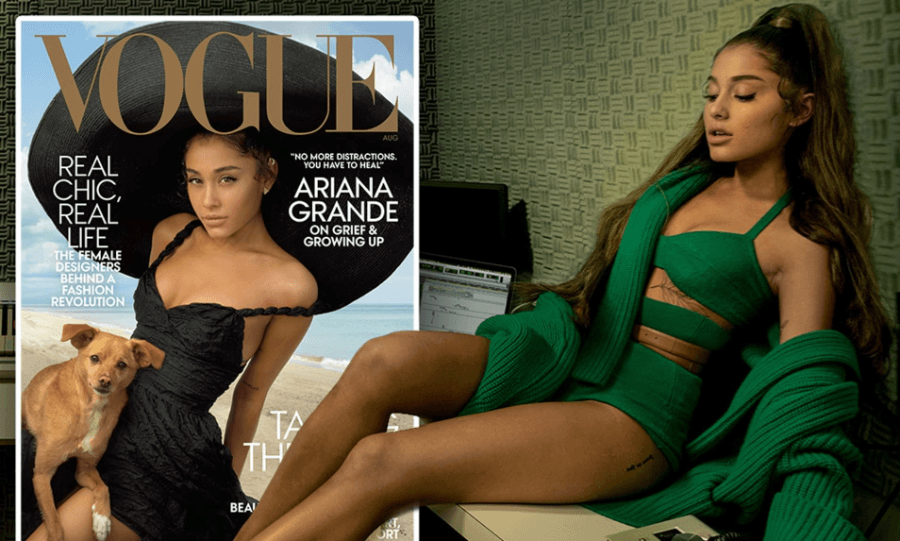
Ariana Grande’s August 2019 Vogue cover remains one of her most important magazine moments. The article, titled “Ariana Grande on Grief and Growing Up,” arrived after an intense period in her life and career. Grande had released hugely successful music, including songs that dominated the charts, but she was also processing grief, trauma, public scrutiny, and emotional exhaustion.
The cover mattered because it moved beyond polished pop-star imagery. Vogue photographed and interviewed Grande in a way that emphasized vulnerability. Instead of presenting her only as a hitmaker, the piece explored the human cost behind the success. That balance helped fans and casual readers understand why her music from that period felt so raw.
Moreover, the 2019 feature showed Grande using art to process pain. Songs from Sweetener and thank u, next had already turned personal heartbreak into pop culture moments. However, the Vogue interview added context. It showed an artist trying to stay open with fans while still protecting parts of herself.
Vogue and the Power of Ariana’s Signature Image
Before her Wicked transformation, Grande had one of the most recognizable pop-star looks of the 2010s. Her high ponytail became a visual logo. Her cat-eye liner, nude lips, oversized tops, and tall boots created a style formula that fans could identify instantly. Because of that consistency, even small changes felt meaningful.
Vogue’s fashion lens helped explain why the image worked. Grande’s look blended sweetness and control. The ponytail felt youthful but theatrical. The boots added confidence. The makeup sharpened her face while keeping a doll-like softness. Additionally, the styling allowed her to move between pop, R&B, Broadway influence, and celebrity glamour without losing recognizability.
However, a signature image can become limiting. Over time, fans began watching for signs of change. Therefore, when Grande entered the Wicked era, the transformation felt dramatic because it challenged a decade of visual memory.
The Wicked Beauty Interview
In 2024, Vogue interviewed Grande about her R.E.M. Beauty x Wicked collection and her transformation into Glinda. That conversation became a key “Ariana Vogue” moment because it connected beauty products to character work. Grande explained that pink had not been a major part of her life until the Wicked audition process, yet the color eventually became intertwined with her new identity.
The interview also explored how beauty helped her deconstruct her pop persona. Grande said her lighter hair and brows gave Glinda a softness that made sense for the character. This detail matters because it shows that the transformation was not just promotional styling. It was part of her acting process.
Additionally, the Wicked collection turned fandom into product storytelling. The packaging and shades drew from the stage show, the movie, and Oz-related references. Therefore, the beauty launch worked on several levels: it promoted the film, expanded R.E.M. Beauty, and gave fans a tangible piece of the Glinda era.
Blonde Hair, Pink Styling, and Method Dressing
Grande’s Wicked era changed how audiences read her style. After years of dark ponytails and pop-star silhouettes, she embraced blonde hair, pale brows, blush tones, delicate textures, and romantic shapes. Although some fans missed her earlier look, the shift made sense within the Glinda narrative.
Method dressing has become a major celebrity-fashion strategy, especially for actors promoting major films. Instead of wearing random red-carpet looks, stars dress in ways that echo their characters. Grande leaned into this approach with soft pinks, fairy-tale styling, and beauty choices that reflected Glinda’s world.
However, the best part of her transformation was its commitment. She did not simply wear pink for one premiere. She lived inside the visual language for years during filming and promotion. Consequently, Vogue’s coverage helped explain the emotional and artistic thinking behind the look.
Vogue Videos and Ariana’s Personality
Ariana’s Vogue presence is not limited to covers and beauty interviews. Vogue video formats also show a more casual side of her. In the “Off the Cuff” conversation with Cynthia Erivo and Jonathan Bailey, Grande joined her Wicked: For Good co-stars for a playful discussion that mixed pop culture, music, and film promotion.
These videos matter because they soften the distance between celebrity image and personality. Grande can appear highly styled and polished in photoshoots, but video interviews often highlight her humor, quick reactions, theater-kid energy, and chemistry with castmates. Additionally, they help fans see the bridge between Ariana the pop star and Ariana the actor.
For a performer with roots in Broadway, Nickelodeon, pop, and film, that bridge matters. Vogue’s video coverage gives audiences a more relaxed version of the same artist they see in carefully styled editorials.
The 2026 Vogue Glam-Team Moment
In July 2026, Vogue published an exclusive interview about Grande’s Eternal Sunshine tour and the visible role of her glam team. The piece described how makeup artist Michael Anthony and hairstylist Alyx Liu joined her onstage during the show, including a touch-up before “7 Rings.” Grande told Vogue that hair and makeup are major parts of storytelling for both music and acting.
This update is important because it shows how Grande now treats beauty as performance architecture. Makeup and hair do not sit behind the scenes. Instead, they become part of the concert narrative. Additionally, her return to honey brunette hair and the high ponytail after years of Wicked blonde styling created another visual reset.
Therefore, the 2026 Vogue moment connected past and present. Grande returned to familiar pop iconography, but she brought a deeper understanding of beauty as collaborative art.
International Vogue Covers and Global Fashion Reach
Ariana Grande’s Vogue presence also extends beyond U.S. Vogue. In 2026, Vogue Japan and Vogue México/Latin America highlighted Grande with cover stories photographed by Michael Bailey-Gates. These international covers reinforced her global fashion status and placed her at the center of conversations around music, acting, and style.
International Vogue features matter because they show how Grande’s image translates across markets. In Japan, Mexico, Latin America, and beyond, her visual identity carries different meanings while still feeling unmistakably “Ariana.” Moreover, these covers arrived during a period when Wicked, music, beauty, and fashion all overlapped in her career.
As a result, the phrase “Ariana Vogue” now points to a global style archive, not just one magazine spread.
Why Ariana Grande Fits Vogue So Well
Ariana Grande fits Vogue because her career has always been visual. Every major era has a clear aesthetic: the early Nickelodeon red hair, the Yours Truly retro sweetness, the Dangerous Woman bunny-mask glamour, the Sweetener softness, the thank u, next heartbreak-pop world, the Wicked Glinda transformation, and the Eternal Sunshine return to pop polish.
Additionally, Grande understands references. She pulls from Broadway, old Hollywood, 1960s beauty, pop diva history, anime-like styling, and modern luxury fashion. Vogue thrives on that kind of layered image-making. Therefore, its coverage can explore not only what she wears, but what the styling communicates.
Most importantly, Grande’s Vogue moments work because they balance control and vulnerability. She may look polished, but the strongest interviews reveal the effort, fear, grief, humor, and craft underneath.

Final Thoughts
Ariana Vogue represents a fashion and beauty timeline of Ariana Grande’s reinvention. Her 2019 Vogue cover gave readers vulnerability during a period of grief and chart success. Her Wicked beauty interview explained how pink, blonde hair, and softer styling helped her find Glinda. Her Vogue videos showed humor and cast chemistry. Meanwhile, her 2026 glam-team feature proved that beauty remains central to her storytelling onstage.
Ultimately, Ariana Grande’s Vogue moments matter because they show image as art, not decoration. Her hair, makeup, fashion, and interviews all help explain where she is in her career. Whether she appears as a pop icon, a Broadway-trained actor, a beauty founder, or a global cover star, Vogue captures the evolution behind the look.