📑Table of Contents:
- Who Is the Queen of Hearts in Descendants?
- Rita Ora’s Adult Queen of Hearts
- Bridget: The Queen Before the Crown
- Red and the Queen of Hearts
- Cinderella and the Old Hurt
- “Love Ain’t It” and the Queen’s Philosophy
- The Queen’s Visual Style
- Why the Queen of Hearts Works as a Descendants Villain
- The Queen of Hearts in Wicked Wonderland
- Final Thoughts
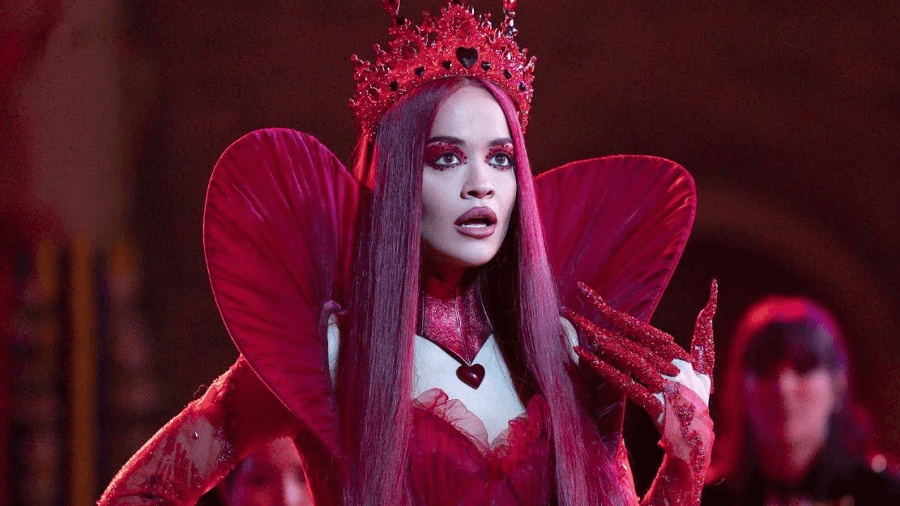
The Queen of Hearts in Descendants became one of the franchise’s most important new villains because she brought Wonderland, time travel, and a mother-daughter conflict into the center of the story. In Descendants: The Rise of Red, Rita Ora plays the adult Queen of Hearts, while Ruby Rose Turner plays her younger self, Bridget. Together, the two versions of the character show how a sweet student can become a ruthless ruler after pain, humiliation, and betrayal.
Because the Descendants franchise often asks whether villain kids must repeat their parents’ mistakes, the Queen of Hearts fits perfectly into the series. She is not only Red’s mother or a classic Disney villain reimagined. She is also a warning. Her story shows what can happen when hurt hardens into control. Therefore, her role gives Red a deeper emotional reason to fight for a different future.
Who Is the Queen of Hearts in Descendants?
In Descendants: The Rise of Red, the Queen of Hearts rules Wonderland with fear, power, and a sharp command of her card soldiers. She is Red’s mother and one of the most dangerous forces connected to Auradon. Disney’s official story description explains that the Queen of Hearts incites a coup on Auradon, forcing Red and Chloe Charming to travel back in time and try to undo the traumatic event that sent Red’s mother down her villainous path.
That premise immediately makes her more than a one-note villain. She is cruel in the present, but the film also asks what made her that way. The adult Queen has a dramatic visual identity: red hair, regal costumes, card-themed power, and a commanding presence. However, her teenage version, Bridget, feels almost opposite. She is kind, hopeful, and eager to make friends.
This contrast gives the character her tragedy. The audience sees the tyrant, but it also sees the girl she used to be.
Rita Ora’s Adult Queen of Hearts
Rita Ora’s version of the Queen of Hearts feels theatrical, glamorous, and intimidating. She plays the character with musical confidence, sharp physicality, and a sense of wounded pride. Because Ora is already known as a pop performer, she brings stage presence to the role. That works especially well in a franchise where songs often reveal character.
The adult Queen does not simply want attention. She wants obedience. She enters Auradon with resentment, and she treats the kingdom’s optimism as weakness. Additionally, she uses Red as an extension of her power. She expects her daughter to be hard, loyal, and ready to rule through fear.
However, the most interesting part of Ora’s performance is not only the villainy. It is the bitterness underneath. The Queen acts like someone who turned pain into armor. As a result, her cruelty feels rooted in an old wound rather than random evil.
Bridget: The Queen Before the Crown
Ruby Rose Turner’s Bridget gives the Queen of Hearts a powerful backstory. In the past, Bridget attends Merlin Academy, the school that later becomes Auradon Prep. Unlike her adult self, she is warm, bright, and generous. She wants friendship and believes in sweetness, kindness, and possibility.
This version matters because she challenges what viewers expect from the Queen of Hearts. Instead of presenting her as born wicked, the film shows her as someone shaped by experience. Bridget’s kindness makes her future transformation more painful. Viewers understand that the tyrant did not appear overnight.
Moreover, Bridget’s story supports one of the franchise’s central ideas: people can change, but environments matter. If someone faces cruelty, bullying, or humiliation without healing, that pain can turn into something destructive. Therefore, Bridget becomes the emotional key to understanding the Queen’s villain arc.
Red and the Queen of Hearts
Red, played by Kylie Cantrall, is the rebellious daughter of the Queen of Hearts. She grows up in Wonderland under her mother’s harsh rule, yet she refuses to become a copy of her. That tension drives much of The Rise of Red. Red wants freedom, but she also carries the fear and anger that come from being raised by a tyrant.
The Queen sees Red as an heir, not just a daughter. She wants Red to inherit her power and worldview. However, Red’s friendship with Chloe Charming challenges that expectation. Chloe represents rules, goodness, and perfection, while Red represents rebellion and survival. At first, they clash. Then, they realize they need each other.
Because of this relationship, the Queen of Hearts becomes more than a villain Red must defeat. She becomes the person Red must understand without becoming. That emotional complexity gives the film its strongest family conflict.
Cinderella and the Old Hurt
The Queen of Hearts’ conflict with Cinderella adds another layer to the story. Brandy returns as Cinderella, while Morgan Dudley plays the younger Ella. The adult Queen’s anger connects to what happened when she and Cinderella were younger at Merlin Academy. That past event becomes the reason Red and Chloe travel back in time.
This choice gives Descendants a more layered moral question. If one painful event helped create the Queen’s cruelty, can changing that event change the future? Additionally, can the daughters of two very different women heal a wound their mothers never resolved?
The Queen’s resentment toward Cinderella also shows how old-school pain can grow into adult conflict. In the Descendants world, teenage choices do not stay small. They can shape kingdoms, families, and entire timelines.
“Love Ain’t It” and the Queen’s Philosophy
The song “Love Ain’t It” helps define the Queen of Hearts’ worldview. In the number, the Queen rejects soft ideas about love, goodness, and fairy-tale optimism. She teaches Red that power matters more than affection. The song works because it turns her emotional damage into a villain anthem.
However, the song also reveals her fear. People who trust love can get hurt. People who rule through fear do not need to be vulnerable. Therefore, when the Queen dismisses love, she is not only being cruel. She is protecting herself from the pain she associates with kindness.
This makes “Love Ain’t It” important to the plot. It explains the emotional rules Red grew up with. Red’s journey then becomes a challenge to those rules. She must decide whether her mother is right or whether love, friendship, and choice can create a different path.
The Queen’s Visual Style
The Queen of Hearts’ look in Descendants uses familiar Wonderland imagery while making it fit the franchise’s modern fantasy style. Red dominates her costumes, hair, and makeup. Card motifs connect her to her soldiers and royal power. Meanwhile, dramatic silhouettes make her appear larger than life.
This visual design matters because Descendants characters often communicate identity through fashion. The original villain kids used leather, studs, bright hair, and exaggerated styling to show attitude and heritage. Similarly, the Queen’s look tells viewers that she belongs to Wonderland but also to a musical fantasy world.
Bridget’s softer look creates the contrast. Her youthful style supports her sweetness and innocence. Therefore, the transformation from Bridget to the Queen becomes visible before the story even explains it fully.
Why the Queen of Hearts Works as a Descendants Villain
The Queen of Hearts works because she fits the franchise’s generational theme. Descendants has always explored children who inherit famous villain legacies. Mal had Maleficent. Evie had the Evil Queen. Jay had Jafar. Carlos had Cruella de Vil. In The Rise of Red, Red has the Queen of Hearts.
However, the film takes the idea further by showing the villain’s parents’ origin. Instead of only asking whether Red can escape her mother’s shadow, the story asks whether the mother’s darkness could have been prevented. That time-travel angle makes the Queen more tragic and more central than a simple villain cameo.
Additionally, the Queen brings a sharper tone to the franchise. Her beheading threats, coup, and authoritarian rule make Wonderland feel dangerous. Yet the musical format keeps the story accessible for Disney Channel’s audience.
The Queen of Hearts in Wicked Wonderland
The Queen of Hearts continues to matter after The Rise of Red. Disney confirmed that Rita Ora reprises the role in Descendants: Wicked Wonderland, the fifth installment of the franchise. Brandy also returns as Cinderella, while Kylie Cantrall and Malia Baker reprise Red and Chloe.
This continuation matters because Wonderland still has unresolved emotional and political consequences. Red and Chloe’s time-travel choices changed the timeline, but the story does not end with one fixed problem. Instead, Wicked Wonderland expands the world and brings Red back into new conflicts connected to identity, loyalty, and family.
Because the Queen returns, fans can expect her influence to remain central. Even when Red makes her own choices, her mother’s shadow still shapes the story.

Final Thoughts
The Queen of Hearts in Descendants is one of the franchise’s strongest reimagined villains because she combines classic Disney iconography with emotional backstory. Rita Ora’s adult Queen brings power, glamour, and menace, while Ruby Rose Turner’s Bridget shows the vulnerable girl behind the crown. Together, they create a character shaped by hurt, pride, and fear.
Ultimately, the Queen matters because she forces Red to choose what kind of person she wants to become. Will Red repeat her mother’s rule through anger, or will she build a different future through friendship and courage? That question gives The Rise of Red its emotional center. In the Descendants universe, the Queen of Hearts is not only the ruler of Wonderland. She is proof that the past can create villains, but the next generation can still change the story.