📑Table of Contents:
- A Quick Recap Of The Show’s Central Mystery
- Why The Missing Body Always Mattered
- The Big Reveal: Maddie Was Never Truly Dead
- How The Possession Happened
- Why Maddie Can See Both Worlds
- Janet’s Motivation And Tragic Perspective
- The Final Scene And Its Implications
- Why The Ending Works So Well
- Clues You Might Have Missed Earlier
- What The Ending Sets Up For Season Two
- Themes Reinforced By The Ending
- Final Thoughts
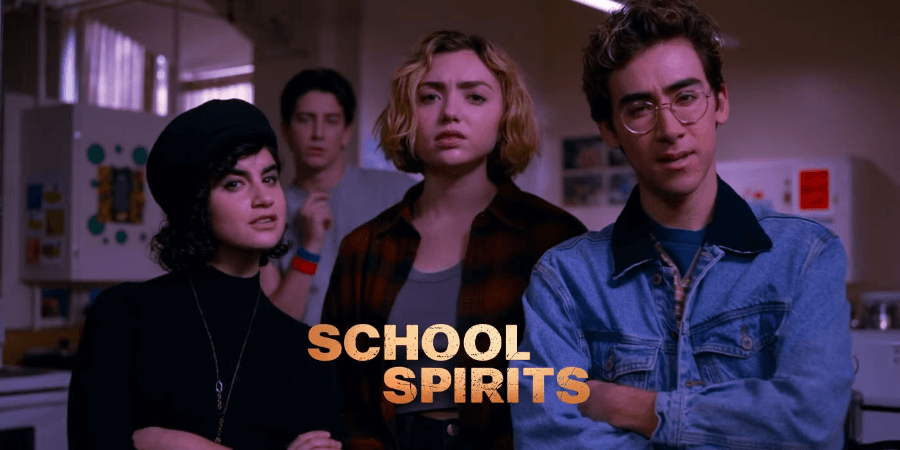
The ending of School Spirits didn’t just answer questions. Instead, it flipped the entire premise of the show on its head. While the series spent most of its runtime asking who killed Maddie Nears, the finale revealed something far more unsettling. Maddie was never dead in the way everyone assumed.
So, if the final episode left you stunned, confused, or eager for answers, you’re not alone. However, once you examine the clues, themes, and character arcs together, the ending becomes clearer—and far more intentional. This breakdown explains exactly what happened, why it matters, and how it reshapes everything moving forward.
A Quick Recap Of The Show’s Central Mystery
From the start, School Spirits presents a deceptively simple mystery. Maddie Nears appears to be dead, and she finds herself stuck at Split River High with other teenage ghosts. Meanwhile, no one can find her body. Because of that, the story frames itself as a whodunit.
At the same time, the show blends genres. It mixes teen drama, supernatural mystery, and emotional coming-of-age themes. Therefore, the mystery never exists in isolation. It always connects to grief, identity, and unfinished business.
As the episodes progress, Maddie investigates her own “death” with help from both the living and the dead. However, the show quietly plants seeds that suggest the truth might be stranger than murder.
Why The Missing Body Always Mattered
Throughout the series, the absence of Maddie’s body feels like a technical detail. However, by the finale, it becomes the most important clue.
In typical ghost stories, death comes with a clear physical ending. Yet in School Spirits, Maddie’s death never receives confirmation. No coroner report appears. No remains surface. Instead, everyone keeps saying, “We just haven’t found her yet.”
That uncertainty matters because the show uses it to challenge assumptions. The audience, like the characters, fills in gaps with familiar tropes. So, when the finale reveals the truth, it doesn’t contradict the story—it completes it.
The Big Reveal: Maddie Was Never Truly Dead
The most shocking moment of the finale confirms that Maddie did not die. Instead, her body became possessed by another spirit: Janet.
Janet is one of the older ghosts at Split River High, and her story always felt unfinished. She died decades earlier under traumatic circumstances, and she never fully accepted her death. So, when an emotional confrontation occurred near the fallout shelter, something unprecedented happened.
Janet crossed over into Maddie’s living body.
As a result, Maddie’s soul separated from her physical form. While Maddie’s consciousness ended up stuck with the other spirits, her body continued living—just not as her.
How The Possession Happened
The show implies that extreme emotional energy triggered the possession. Janet felt rage, fear, and desperation. Meanwhile, Maddie felt confused and vulnerable. Together, those conditions created an opening.
Importantly, the show does not frame this as random magic. Instead, it treats the event as a consequence of suppressed trauma and unresolved identity. Janet didn’t just want freedom. She wanted life.
Because Maddie stood physically present at the moment of emotional collapse, Janet seized the opportunity. Therefore, what looked like a death scene turned out to be a spiritual displacement.
Why Maddie Can See Both Worlds
Earlier episodes establish that Maddie can interact with both the living and the dead. At first, this seems like a convenient narrative device. However, the finale reframes it as a clue.
Maddie exists in a liminal state. She is not fully dead, yet she is not fully alive. Because her body still functions in the living world, her soul never fully crossed over.
That explains why she communicates with Simon and why her presence feels different from the other spirits. She doesn’t belong where she is, and the universe reflects that imbalance.
Janet’s Motivation And Tragic Perspective
It’s easy to view Janet as a villain after the reveal. However, the show resists that simplicity.
Janet represents someone who never got a second chance. She died young, lost her future, and remained trapped in the same building for decades. While Maddie struggled with her identity, Janet lost hers completely.
Therefore, when Janet took Maddie’s body, she didn’t act out of pure malice. She acted out of desperation. Still, desperation does not erase harm.
The tragedy lies in the contrast. Maddie wants her life back. Janet wants any life at all.
The Final Scene And Its Implications
The finale’s last moments confirm that Maddie’s body still lives in the outside world. Janet, inside that body, leaves town. Meanwhile, Maddie watches helplessly, trapped among spirits who now realize she doesn’t belong with them.
That ending changes theseries’ core conflicts. The mystery is no longer “Who killed Maddie?” Instead, it becomes “How can Maddie get her life back?”
At the same time, it raises ethical questions. If Janet built a life inside Maddie’s body, does removing her count as another death? The show intentionally leaves that unresolved.
Why The Ending Works So Well
The ending succeeds because it honors character, theme, and setup. Rather than delivering a shock twist for its own sake, it recontextualizes everything.
Earlier conversations about identity now carry new weight. Maddie’s uncertainty about who she was becomes literal—Janet’s inability to move on gains tragic clarity. Even the school itself feels less like a haunted location and more like a holding space for unfinished selves.
Additionally, the ending avoids easy closure. It respects the audience enough to let discomfort linger.
Clues You Might Have Missed Earlier
Once you know the ending, earlier episodes feel different.
Janet’s fixation on Maddie suddenly stands out. The way Maddie’s death never fits standard ghost rules becomes obvious. Even the show’s pacing, which delays answers longer than expected, now feels deliberate.
The writers didn’t unfairly hide the truth. Instead, they trusted viewers to question assumptions. That trust pays off in retrospect.
What The Ending Sets Up For Season Two
Season two, if it continues the story, has rich ground to explore.
First, Maddie must figure out how to reclaim her body. That journey likely involves confronting Janet directly. Second, the rules of possession need clarification. If this happened once, could it happen again?
Meanwhile, the living characters face consequences. Simon now knows the truth. Maddie’s mother still grieves a daughter who technically lives. And Janet, wearing Maddie’s face, must decide how far she will go to keep her stolen life.
Because of these threads, the story expands beyond a single mystery. It becomes a philosophical exploration of ownership, identity, and survival.
Themes Reinforced By The Ending
The ending reinforces the show’s core themes rather than replacing them.
Identity remains central. Maddie’s fight becomes a literal battle for selfhood. Grief still matters, but now it stretches across both worlds. Trauma doesn’t disappear—it transforms.
Most importantly, the show argues that unresolved pain can distort reality. Janet’s pain broke a boundary that should not have broken. Maddie’s pain left her vulnerable. Together, those forces changed everything.

Final Thoughts
The School Spirits ending works because it refuses to play it safe. It takes a familiar genre and twists it toward emotional truth rather than procedural resolution.
By revealing that Maddie was never truly dead, the show reframes its entire narrative. It shifts from a murder mystery to an identity crisis stretched across life and death.
Ultimately, the ending asks a haunting question: if someone else lives your life better than you ever could, do you still deserve it?
That question lingers long after the screen fades to black.