📑Table of Contents:
- Who Archie And Lilibet Are
- Their Titles And Why They Still Draw Debate
- A California Childhood With Royal Visibility At The Edges
- Why Meghan And Harry Share So Little
- The 2025 And 2026 Glimpses Changed The Conversation
- How Archie And Lilibet Reflect Harry And Meghan’s Post-Royal Identity
- Why The Public Projects So Much Onto Them
- The Sibling Story At The Heart Of It
- Final Thoughts
Last updated on April 19th, 2026 at 07:44 pm
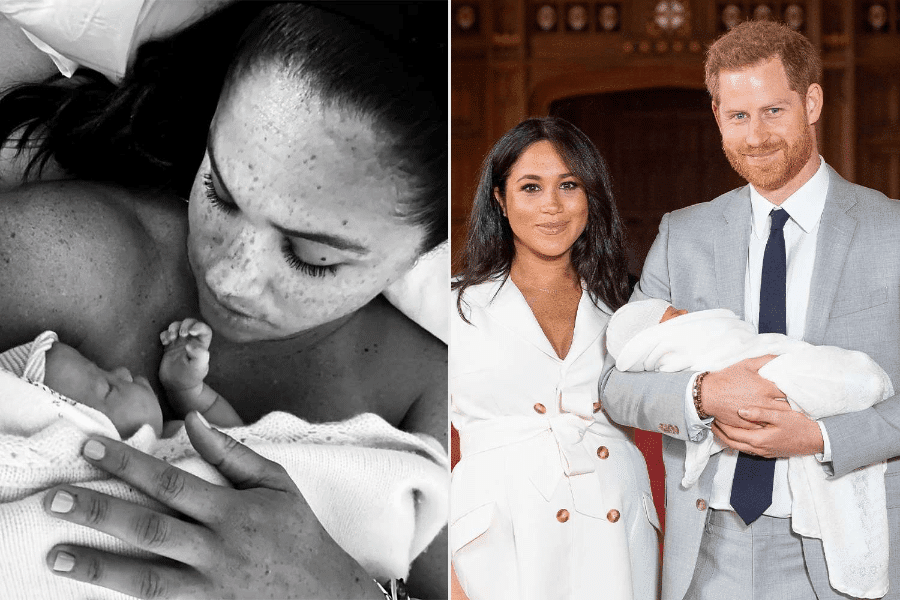
Lilibet and Archie occupy a uniquely modern place in royal life. They are the children of Prince Harry and Meghan Markle, grandchildren of King Charles III, and part of the line of succession. However, they are also being raised primarily in California, outside the working royal system. This means largely beyond the day-to-day machinery of palace publicity. Therefore, public fascination with them stems from a tension that is difficult to ignore. They are deeply connected to one of the world’s most famous families, yet they are presented to the world only in carefully controlled glimpses.
That tension matters because it shapes almost every conversation about them. Archie and Lilibet are not invisible. However, they are not publicly accessible as many royal watchers were trained to expect of royal children. Meghan and Harry have occasionally shared family images, especially in 2025 and early 2026. Yet those posts have generally protected the children’s privacy by limiting direct facial exposure and keeping the context intimate rather than formal.
Consequently, any meaningful article about Lilibet and Archie should focus less on speculation and more on what their public story actually reveals. This includes names, titles, family structure, selective visibility, and the parenting choices behind it.
Who Archie And Lilibet Are
Archie is the elder child of Prince Harry and Meghan, Duchess of Sussex. The Royal Family’s official website states that Prince Archie of Sussex was born on May 6, 2019, and identifies him as the first child of the Duke and Duchess of Sussex. Lilibet Diana Mountbatten-Windsor, now styled Princess Lilibet of Sussex, was born on June 4, 2021, in Santa Barbara, California. Together, they represent the Sussexes’ immediate family unit. Not only that, but the next generation of a branch of the royal family is now rooted largely in the USA.
Their names also carry symbolic weight. Archie’s name immediately stood out because it felt more personal and less traditionally aristocratic than many royal-watchers expected. Lilibet’s name, by contrast, carried a direct royal echo through its connection to Queen Elizabeth II’s childhood family nickname. While her middle name, Diana, honored Harry’s mother.
Therefore, both children’s names reflected a balance between modern parental choice and family history. That same balance still shapes how the Sussexes present them publicly now.
Their Titles And Why They Still Draw Debate
One reason Archie and Lilibet remain so widely discussed is that their titles symbolize more than etiquette. After King Charles III acceded to the throne, Harry and Meghan’s children became entitled to princely titles as grandchildren of the sovereign. ABC News reported in 2023 that Buckingham Palace confirmed the use of the titles Prince Archie and Princess Lilibet, and the Royal Family website separately reflects Archie’s styling as Prince Archie of Sussex. Therefore, the children’s titles are not speculative or fan-invented; they are part of the formal royal record.
However, titles alone do not define the children’s daily lives. They are not growing up inside the traditional routines of palace engagements, school-arrival photo calls, or official family balcony appearances. Instead, their parents appear to reserve formal titles for official contexts while shaping everyday childhood around a far more private and California-based family experience.
A California Childhood With Royal Visibility At The Edges
The most striking thing about Archie and Lilibet’s public identity is that it is neither fully royal nor fully celebrity in the typical sense. They are not palace children, yet they are not being raised as conventional Hollywood-adjacent influencer kids either. Instead, People’s recent family life roundup shows that Meghan and Harry have offered only occasional glimpses of birthdays, holidays, garden days, and quiet family rituals. Therefore, the children’s public image is built less through official portrait tradition and more through curated lifestyle fragments.
That style creates a very specific impression. It suggests a childhood centered on domestic routines, outdoor play, and a home environment that their parents carefully control. The 2025 garden images, Mother’s Day post, birthday tributes, and Easter clips all reinforced that same atmosphere.
As a result, Archie and Lilibet are seen not as little public figures with their own media role, but as protected children appearing at the edges of their parents’ story when Meghan chooses to share them.
Public curiosity around Archie and Lilibet often leads to the same question. Why do Meghan and Harry show them so rarely? The strongest answer appears to be privacy and safety. Recent reports from people around the family’s Australia trip noted that Archie and Lilibet did not accompany their parents. It emphasized that Harry and Meghan continue to keep their children largely out of the public eye. This approach aligns with the couple’s long-stated discomfort with press intrusion and their desire to protect family life from becoming constant public property.
Moreover, selective sharing gives the Sussexes control over context. If the children are seen only when Meghan or Harry chooses the setting, framing, and tone, then the family can shape how those glimpses are interpreted. Therefore, the strategy is not simply secrecy. It is controlled visibility. They are not pretending the children do not exist in public life; instead, they are deciding the terms under which the public gets to see them.
The 2025 And 2026 Glimpses Changed The Conversation
The public conversation around Archie and Lilibet shifted noticeably once Meghan resumed sharing occasional Instagram glimpses in 2025 and early 2026. People’s recent roundup of these moments includes Easter clips, Valentine ’s-themed family snippets, garden scenes, and birthday tributes, all of which expanded the visual record without fully abandoning privacy. Therefore, Archie and Lilibet became slightly more visible, but not in a way that dissolved the family’s boundaries.
Those glimpses also humanized the family in a way formal portraiture often does not. Instead of rigidly staged images of children, viewers saw holiday crafts, flower picking, soft outdoor light, and family closeness. As a result, the children’s public image became warmer and more textured, while still remaining limited.
That is likely why attention around them intensified rather than faded. The public saw more, but not enough to fully satisfy its appetite. Consequently, every image felt like both a reveal and a reminder of what was still being withheld.
How Archie And Lilibet Reflect Harry And Meghan’s Post-Royal Identity
Archie and Lilibet are also important because they reflect the larger shift in Harry and Meghan’s lives since stepping back from royal duties. The children symbolize the family’s American chapter as clearly as they symbolize royal descent. Archie was born before the Sussexes fully exited the working royal structure, while Lilibet was born in California after that major break. Therefore, the two children almost mark the transition point themselves: one born into the last phase of official royal life, the other into the family’s self-directed new chapter.
That makes them culturally significant in a way that goes beyond ordinary interest in famous children. They represent the long-term outcome of Harry and Meghan’s decision to build a different life.
Consequently, public fascination with them is also fascination with that larger choice: what does a royal-adjacent childhood look like when it unfolds far from the palace, under parents who reject many of the old institutional norms but still carry the family’s titles, symbolism, and history?
Why The Public Projects So Much Onto Them
Part of the lasting attention around Archie and Lilibet comes from projection. Because the public sees so little of them, people fill the gaps with assumptions. They read significance into hair color, height, clothing, holiday rituals, and family outings. They also use the children as symbols in broader debates about the Sussexes, the monarchy, privacy, race, media treatment, and modern celebrity parenting. Therefore, the children often carry meanings that have very little to do with their actual daily lives.
That projection is exactly why careful writing about them matters. A respectful article should avoid treating them as public content to be endlessly decoded. Instead, it should focus on what is verifiable: who they are, where they fit in the family, how their parents present them, and why that presentation differs so much from earlier royal patterns. Consequently, the most thoughtful way to write about Lilibet and Archie is to place them in context rather than to chase every tiny glimpse as though it were a revelation.
The Sibling Story At The Heart Of It
For all the public symbolism attached to them, Archie and Lilibet are also just siblings growing up together. The limited images Meghan shares often depict them in shared domestic scenes rather than as an isolated subject. That matters because it frames them first as children in a family, not as separate public entities with distinct “brands.” Therefore, the emotional core of their story is simpler than the surrounding media noise suggests. It is about brother and sister, parents and children, and a family trying to preserve ordinary closeness under very unusual circumstances.
Additionally, that sibling framing helps explain why the public responds so strongly. There is something grounding in those glimpses. They show not monarchy first, but family first. As a result, Archie and Lilibet remain fascinating not only because they are royal children, but because the small windows into their lives make them seem like recognizably loved children, too.

Final Thoughts
Lilibet and Archie matter in public culture because they sit at the intersection of royalty, reinvention, and privacy. They are Prince Harry and Meghan Markle’s children, they hold royal titles, and they remain part of the line of succession. However, they are also growing up in California, outside the palace system, in a family that shares only carefully chosen glimpses of their lives. Therefore, the fascination around them is unlikely to fade soon. It is built into the unusual world they inhabit.
Ultimately, the most revealing thing about Archie and Lilibet may not be any single photo or title update. It may be the pattern itself: rare appearances, controlled storytelling, and a family determined to let the children be seen only in ways that still protect them. And in a media culture that usually demands constant access, that choice may be the most defining part of their story.