📑Table of Contents:
- Why The Retirement Question Became So Serious
- The Chiefs’ Context Made The Decision Even Bigger
- Travis Kelce Ultimately Chose To Return
- The Return Was Not Just Symbolic
- Why He Decided To Keep Playing
- The Contract Added Another Layer Of Clarity
- Why The Retirement Question Will Not Go Away
- What One More Season Means For His Legacy
- Final Thoughts
Last updated on April 19th, 2026 at 07:47 pm
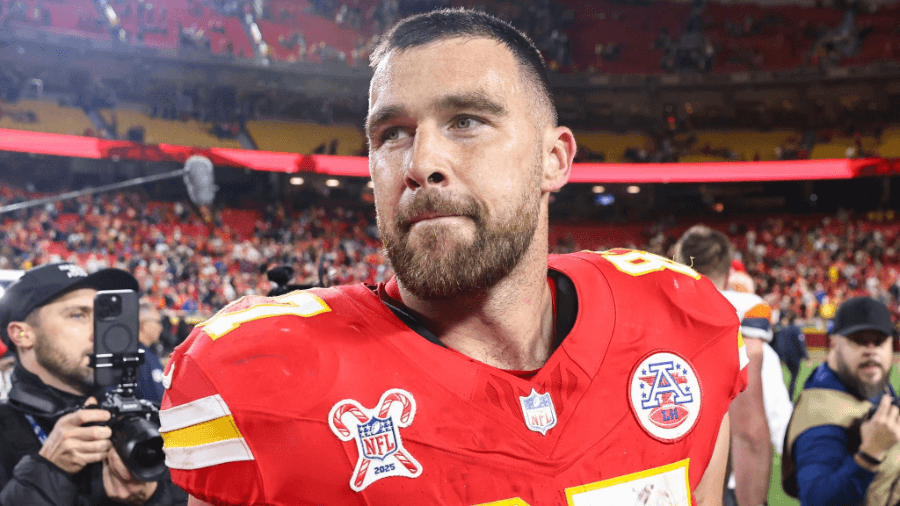
The question “Is Travis Kelce retiring?” became one of the biggest NFL talking points of 2026 for a reason. He is no ordinary veteran. He is one of the most accomplished tight ends in league history, a centerpiece of the Kansas City Chiefs offense, and a player whose future affects both football culture and the league’s broader media conversation. Therefore, when retirement speculation began to build, it never felt like a casual offseason rumor. It felt like a real turning point that fans, analysts, and the Chiefs themselves had to take seriously.
However, the strongest current answer is now clear: Travis Kelce is not retiring right now. In March 2026, he confirmed that he would return to the Kansas City Chiefs for a 14th NFL season, and the Chiefs later made that return official. Reports from the NFL, Chiefs, ESPN, and other major outlets all align on that point.
Consequently, the more interesting story is no longer whether he retired. It is why the possibility felt so real, why he ultimately came back, and what this decision says about where his career stands now.
Why The Retirement Question Became So Serious
Speculation about elite veterans’ retirements happens every year, yet this case felt heavier than usual. That is partly because Travis Kelce has already accomplished almost everything a player at his position could reasonably want: championships, all-time respect, franchise records, and a future Hall of Fame résumé. The Chiefs’ own reporting on his return framed his career as one of the greatest ever at tight end, while NFL coverage treated the decision as a major league development rather than a routine roster update. Therefore, the public was not asking whether he had earned the right to walk away. Everyone already knew he had.
Moreover, the timing made the rumors feel legitimate. After 13 seasons in the league and years of deep playoff runs, Kelce had already absorbed an enormous amount of physical wear. He also addressed that reality publicly before making his decision, speaking on New Heights about the toll of going so deep into the postseason year after year.
As he explained, repeated AFC Championship and Super Bowl appearances mean extra games, extra preparation, and extra strain on the body. Consequently, his retirement talk did not feel like it was invented by outsiders. It had enough grounding in his own words to become believable.
The Chiefs’ Context Made The Decision Even Bigger
Travis Kelce does not play in a quiet football environment. He plays for a franchise that expects to contend, for a quarterback who still defines the modern NFL, and for a team whose season is judged in championships rather than participation. Therefore, any decision about his future instantly becomes a Chiefs story, not just a personal one. If he had retired, the effect would not have been symbolic only. It would have changed the structure of Kansas City’s offense in a meaningful way.
Additionally, Kelce’s role is not only technical. He is also part of the Chiefs’ identity. He has spent his entire professional career in Kansas City, and his connection to the franchise now goes far beyond production numbers. That continuity matters because, in his case, retirement would have marked the end of a defining era, not merely the departure of an aging starter. Consequently, the retirement question carried emotional force for the fan base as well as strategic weight for the organization.
Travis Kelce Ultimately Chose To Return
The suspense ended in March 2026. First, multiple outlets reported that Kelce had informed the Chiefs he planned to return. Then, the Chiefs officially announced that he would be back for a 14th season. Chiefs.com stated directly that Kelce would return to Kansas City, while NFL.com confirmed that he had made his decision and would play in 2026. Therefore, the answer to the retirement question is no longer ambiguous. He considered the possibility seriously, but he chose to keep playing.
That confirmed return matters because it changed the story from speculation to commitment. Once the Chiefs formalized the move, the conversation shifted from rumor to expectation. Instead of asking whether he was done, people started asking what kind of season he could still deliver, how much he had left physically, and whether one more year might become the closing chapter after all. In other words, retirement talk gave way to legacy talk.
The Return Was Not Just Symbolic
One easy mistake would be to assume Travis Kelce returned merely for sentiment. The available reporting suggests something more substantial. Chiefs.com noted that in 2025, he still led Kansas City in receptions, receiving yards, and receiving touchdowns, finishing with 76 catches for 851 yards and five touchdowns.
The same report emphasized that it marked his 12th straight season with at least 800 receiving yards, tying Jerry Rice for the longest such streak in NFL history. Therefore, Kelce did not return as a ceremonial figure. He returned as a player who still mattered on the field in measurable ways.
That statistical context is important because retirement usually becomes more urgent when performance collapses. While age and mileage were clearly part of the conversation, the Chiefs’ reporting makes clear that Kelce was still productive in 2025. Consequently, the decision to return looks less like denial and more like a judgment that he still had enough high-level football left to justify another season.
Why He Decided To Keep Playing
Although only Kelce knows the full emotional truth behind the decision, the public evidence points to a few clear factors. First, competitive drive still mattered. NFL.com reported that Kelce said the Chiefs needed to be “hungrier” in 2026, suggesting his return was driven partly by unfinished business and a desire to respond rather than fade out. Therefore, this was not framed as one more lap for nostalgia. It was framed as an attempt to get something right again.
Second, the organizational environment likely helped. Kelce himself referenced conversations with Patrick Mahomes, head coach Andy Reid, and the rest of the group when discussing his motivation. That matters because veteran retirement decisions are rarely made in isolation.
Players weigh their body, yes, but they also weigh the room around them. Consequently, staying in a trusted system with a familiar contender likely made “one more season” feel more realistic than retirement did.
Third, the simple truth may be that Kelce was not mentally done, even if retiring was something he was considering. Physical fatigue can be severe, but retirement requires emotional finality too. The reporting around his decision suggests he took some time before concluding that he still wanted to compete. Therefore, his return tells us that even after serious reflection, the pull of football remained stronger than the appeal of stepping away.
The Contract Added Another Layer Of Clarity
The return also became more concrete when details of his new deal emerged. ESPN reported that Kelce agreed to a one-year deal worth $12 million, with a maximum value of $15 million. Yahoo Sports separately reported the same general structure after the Chiefs made the return official. Therefore, this was not a vague “we’ll see” comeback. It was a defined, short-term commitment that fits the profile of a veteran making a deliberate one-year decision rather than launching into a new multi-year phase. This shows Kelce not retiring since he isn’t ready to step away yet.
That structure matters because it tells us something about the stage of his career. A one-year deal often signals flexibility, realism, and mutual caution. It lets the player return without pretending the horizon stretches endlessly ahead. Consequently, the contract itself quietly reinforces the truth most observers already understand: Travis Kelce is not retiring now, but he is operating in the late-career zone where every season could plausibly be the last.
Why The Retirement Question Will Not Go Away
Even with a confirmed return, the retirement question remains. In fact, one reason it stayed so interesting is that fans can now see the shape of the final chapter, even if they cannot yet see its endpoint. Kelce is older, deeply accomplished, and already speaking publicly about the physical demands of the game. Therefore, every new season now carries double meaning: it is both a football season and a countdown season.
Additionally, his cultural visibility keeps the topic alive. Kelce is not only an NFL star. He is a public figure whose life and choices generate attention well beyond sports media. As a result, retirement talk around him grows faster and travels farther than it would for a less visible veteran. Consequently, even a confirmed return does not stop people from asking the larger question. It only postpones the answer.
What One More Season Means For His Legacy
In legacy terms, this return is fascinating. Kelce already had the résumé of an all-time great before choosing to come back. Therefore, 2026 is not a season he needs in order to prove himself historically. Instead, it is a season that can sharpen, extend, or complicate the closing image of his career. If he remains highly productive, the return will look wise and competitive. If he declines sharply, some will inevitably argue he should have left earlier. Consequently, the coming season matters not because it builds the foundation of his legacy, but because it influences the tone of its ending.
That is what makes late-career seasons so compelling. They are rarely neutral. They either deepen greatness or expose the cost of staying too long. Travis Kelce has chosen to accept that risk, suggesting he believes the potential reward still outweighs the risk. Therefore, retirement is no longer the immediate story, but it remains the shadow story behind everything that comes next.

Final Thoughts
So, is Travis Kelce retiring? No, not right now. He seriously considered the possibility, he publicly acknowledged the wear and tear of his career, and he gave the question enough weight for the speculation to feel real. However, in March 2026, he chose to return to the Kansas City Chiefs for a 14th season, and the team later made that return official.
Ultimately, that decision tells us two things at once. First, Travis Kelce is not retiring or finished yet. Second, the end is now part of the story every time he takes the field. And that is exactly why the retirement question remains so powerful: it is no longer about whether he has earned the right to leave. It is about when one of football’s defining modern careers will finally decide it is done.