📑Table of Contents:
- How Many Children Does Trisha Paytas Have?
- Meet The Children: Names And Birth Order
- Malibu Barbie: The First Child And The Beginning Of A New Era
- Elvis: The Second Child And A Bigger Conversation About Names
- Aquaman Moses: The Third Child And The Fastest Viral Moment
- Why The Internet Fixates On Trisha Paytas’ Children
- The Difference Between Sharing And Exploiting
- Parenting In Public: The Hard Part No One Sees
- How Motherhood Changed Trisha’s Public Persona
- The Role Of Moses Hacmon In Their Family Dynamic
- What To Avoid When Talking About Trisha Paytas’ Children
- What Comes Next For Trisha Paytas’ Family
- Conclusion
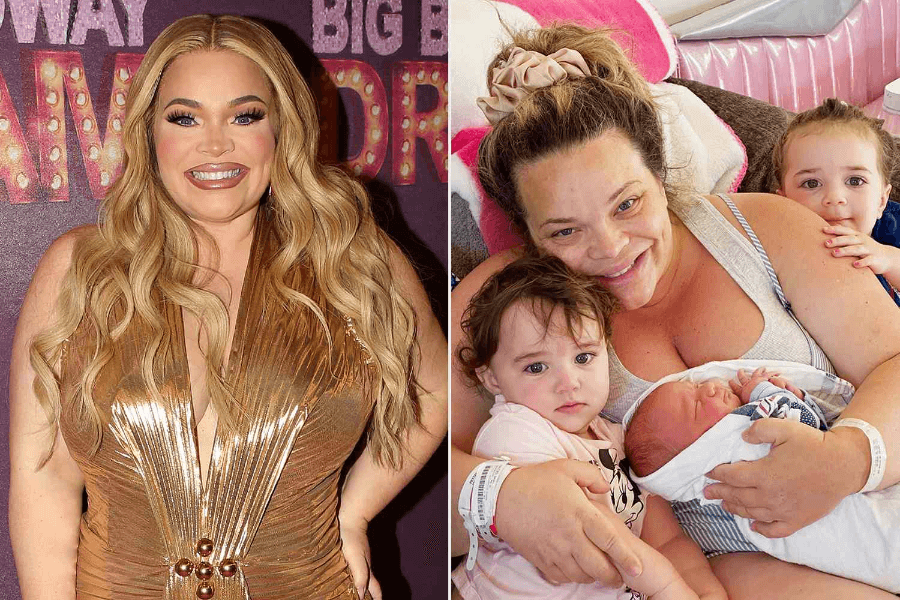
Trisha Paytas has lived online for years. However, her life changed shape when she became a parent. While the internet often treats her like a meme machine, motherhood has made her more complicated. Moreover, it introduced stakes that don’t fade after a trend cycle ends.
Trisha’s children also sit at the center of constant curiosity. People ask about names. People ask about birth announcements. People ask about what she shares and what she refuses to share. Therefore, any “Trisha Paytas children” conversation quickly becomes a conversation about modern family privacy in the creator economy.
This article walks through what’s publicly known about Trisha Paytas’ children, how her family grew, and why the online attention around her kids continues to evolve. Additionally, it explores the parenting boundaries that matter when your job is online.
How Many Children Does Trisha Paytas Have?
Trisha Paytas has three children with her husband, Moses Hacmon. Their family includes two daughters and one son.
Their children’s names are distinctive and often make headlines. However, the names also reflect something consistent about Trisha’s brand: she leans into bold choices. At the same time, she has shown a strong protective instinct about her children’s daily lives. So, while the names feel loud, her boundaries often feel surprisingly firm.
Meet The Children: Names And Birth Order
Trisha and Moses welcomed their first child in 2022. Then, they welcomed their second child in 2024. After that, they welcomed their third child in 2025. Consequently, the family grew rapidly over a few years.
Here are the children, in birth order:
- Malibu Barbie Paytas-Hacmon (daughter)
- Elvis Paytas-Hacmon (daughter)
- Aquaman Moses Paytas-Hacmon (son)
Because these names travel fast online, they also attract strong opinions. Still, it helps to remember a simple truth: parents name their children for personal reasons, not for comment sections.
Malibu Barbie: The First Child And The Beginning Of A New Era
Malibu Barbie arrived as Trisha’s first major “life chapter” shift. Before motherhood, Trisha’s online identity centered on performance, reinvention, and constant content churn. However, her daughter’s arrival created a new center of gravity.
Even so, Malibu Barbie didn’t become a typical “influencer baby” character. Trisha shared moments, yet she also kept large parts of her daughter’s life off-camera. Moreover, she often framed motherhood as grounding, even when her online persona stayed chaotic.
The name Malibu Barbie also set expectations. It sounded playful. It sounded pop-cultural. And because it sounded so on-brand, many people assumed it existed purely for attention. However, parenting quickly reveals what’s real, because children don’t cooperate with performance for long. Therefore, the sustained theme here is not the name. It’s the commitment.
Elvis: The Second Child And A Bigger Conversation About Names
In 2024, Trisha and Moses welcomed their second child, a daughter named Elvis. That choice sparked immediate debate, because many people treat “Elvis” as a traditionally male name. However, modern naming trends have moved for years. Parents now pick names for vibe, meaning, and sound rather than strict gender rules.
Trisha’s choice also reflected a common experience: parents often choose a name before they know the baby’s sex. Then, they keep the name because they love it. Additionally, unconventional names fit Trisha’s public identity. So, the name became another example of her doing what she wants, even when the internet complains loudly.
More importantly, the second child often changes family life in particular ways. One child transforms you into a parent. Two children transform your home into a system. Consequently, Trisha’s “mom era” shifted from novelty to rhythm.
Aquaman Moses: The Third Child And The Fastest Viral Moment
In 2025, Trisha and Moses welcomed their third child, a son named Aquaman Moses. The name went viral almost instantly. Moreover, it triggered the predictable internet cycle: shock, jokes, think-pieces, then imitation memes.
Still, the name also connects to personal symbolism. Mosesis is associated with water-themed art and aesthetics. Meanwhile, Trisha has a long-standing obsession with pop culture. Therefore, “Aquaman” fits both parents’ worlds in a single word.
Because the third baby arrived after two children already changed the household, this moment also carried “completion” energy. Trisha herself has implied she may be done having children. So, for many viewers, Aquaman Moses represented the end of one arc and the beginning of a more settled chapter.
Why The Internet Fixates On Trisha Paytas’ Children
Trisha Paytas attracts attention for a simple reason: she built a career on being watched. However, children complicate that dynamic. They don’t choose the spotlight, yet the spotlight often finds them anyway.
Additionally, Trisha’s audience includes people who love her, people who hate-watch her, and people who treat her life like an ongoing reality TV show. Therefore, her kids became part of a “storyline” in the public mind, even when she tried to keep them out of certain frames.
The internet also loves extremes. It rewards “most iconic baby name” and “wildest announcement” narratives. As a result, Trisha’s children became internet objects of fascination before most people even learned anything meaningful about them.
The Difference Between Sharing And Exploiting
A key question follows any creator-parent: when does sharing become exploitation?
Trisha’s parenting content often sits in a middle zone. She shares family milestones. She shares feelings about motherhood. She shares occasional glimpses of home life. However, she also avoids turning her children into constant content hooks.
That difference matters. A child can appear in a photo without becoming the product. Similarly, a parent can talk about parenting without turning the child into a brand mascot.
Moreover, the safest approach usually involves scarcity and boundaries. Trisha often uses that method. She gives audiences enough to feel up to date. Yet she doesn’t provide a full access pass.
Parenting In Public: The Hard Part No One Sees
Parenting already comes with pressure. However, parenting while millions of people comment adds another layer.
Every parenting choice becomes a debate. Every feeding method becomes a judgment. Every toddler tantrum becomes an “analysis.” Consequently, creator-parents face a unique challenge: they must protect their child while also maintaining the public identity that pays their bills.
Trisha’s history also adds complexity. She built a career around shock humor and constant reinvention. Therefore, some viewers struggle to accept her as a stable parent. Yet people change, especially when a baby arrives. Moreover, many adults become more serious when their children depend on them.
So, the real story here isn’t “can she still be Trisha?” It’s “can she be a parent while staying online?” That question doesn’t have an easy answer.
How Motherhood Changed Trisha’s Public Persona
If you track Trisha’s content across time, you can see the tonal shift. She still performs. She still exaggerates. She still leans into comedic chaos. However, motherhood introduced a more consistent emotional through-line.
She talks about responsibility more often. She frames decisions around her kids more often. And she appears more invested in stability, even when she jokes about being messy. Consequently, her audience now sees two versions of her at once: the entertainer and the caretaker.
That duality can look contradictory. Yet it can also look human. People contain contradictions, and parenting usually reveals them.
The Role Of Moses Hacmon In Their Family Dynamic
Moses plays a significant role in how the public reads their parenting. He often appears calmer. He often appears more private. Therefore, he functions as a stabilizing contrast in the couple’s presentation.
Additionally, many viewers interpret their partnership as a balancing act. Trisha brings performance energy. Moses brings quiet structure. Whether that interpretation is fully accurate doesn’t matter as much as how it shapes audience perception.
Still, the practical reality remains: parenting requires teamwork. And when the internet scrutinizes your every move, teamwork matters even more.
What To Avoid When Talking About Trisha Paytas’ Children
Because Trisha’s kids are minors, the healthiest public conversation avoids a few common traps.
First, avoid turning children into jokes. Humor about adults lands differently than humor about kids. Second, avoid obsessive speculation about their future identities. Children deserve room to grow. Third, avoid treating names as a reason to harass a family. A name choice doesn’t justify cruelty.
Moreover, a public parent still deserves basic boundaries. So, even if you dislike Trisha, the ethical line remains clear: the children should not pay for adult opinions.
What Comes Next For Trisha Paytas’ Family
Trisha’s family era will continue to evolve. The children will grow. School will change routines. Privacy concerns will increase. And content choices will become more consequential over time.
Therefore, the next phase likely centers on boundaries. Many creator-parents tighten privacy as children age. They share less. They show fewer faces. They focus on the parents’ experience rather than the child’s image. Trisha may continue moving in that direction.
At the same time, she will likely keep celebrating milestones. She enjoys spectacle. She enjoys themed moments. And she enjoys telling stories. So, the balance will remain: joy without overexposure.

Conclusion
Trisha Paytas’ children mark the biggest shift in her public life. Malibu Barbie introduced her motherhood era. Elvis expanded it into a true family system. Aquaman Moses turned it into a family of five and sparked another viral moment.
However, the deeper story isn’t the names or the headlines. Instead, it’s the ongoing challenge of raising children while living online. Trisha’s life proves that the internet doesn’t forget, and it doesn’t look away. Yet parenting demands focus, patience, and protection.
Therefore, Trisha’s children sit at the intersection of two powerful forces: family privacy and public curiosity. And as those forces collide, the most important principle remains simple: kids deserve a childhood that belongs to them, not to the timeline.