📑Table of Contents:
- Who is Shakira Caine Is
- Early life and cultural roots
- Miss World 1967 and international recognition
- Modeling career and transition to film
- Choosing a different definition of success
- Meeting and marrying Michael Caine
- Motherhood and private family life
- Public appearances without oversaturation
- Why Shakira Caine still captures attention
- Navigating misinformation and modern curiosity
- Legacy and cultural significance
Last updated on December 27th, 2025 at 07:18 pm

Shakira Caine has spent much of her life in the shadow of fame without being consumed by it. Although she stood at the center of fashion, film, and celebrity culture during the height of her career, she never relied on constant visibility to define herself. Instead, she built a life that balanced ambition with restraint, and public interest in her has never fully disappeared.
Today, many people know her primarily as the wife of legendary actor Michael Caine. However, that framing misses the larger picture. Long before their marriage, Shakira Caine had already established an international presence through pageantry, modeling, and acting. Therefore, understanding her story requires looking at both her independent achievements and the choices she made later in life.
Who is Shakira Caine Is
Shakira Caine, born Shakira Baksh, is a Guyanese-British former fashion model and actress. She gained international recognition in the 1960s and later appeared in several films during the early 1970s. Over time, she became equally known for a personal decision that shaped her public image: stepping back from entertainment at the height of opportunity.
That decision did not erase her relevance. Instead, it reframed it. Consequently, Shakira Caine occupies a unique space in public memory—recognized, respected, and rarely overexposed.
Early life and cultural roots
Shakira Baksh was born in Guyana, then British Guiana, and she grew up in a household shaped by craftsmanship and tradition. Her mother worked as a dressmaker, which introduced Shakira to fashion from a practical perspective rather than a purely glamorous one.
Because of that upbringing, she developed an early sensitivity to fabric, form, and presentation. Later, when she entered pageantry and modeling, those instincts helped her stand out. Rather than relying only on surface beauty, she projected confidence grounded in familiarity with style as a form of expression.
Additionally, her background carried symbolic weight. At a time when global beauty standards remained narrow, her success represented visibility for women from regions rarely centered on international stages.
Miss World 1967 and international recognition
Shakira’s breakthrough came when she won Miss Guyana and advanced to the Miss World 1967 competition, where she placed as second runner-up. That placement instantly elevated her profile and opened doors beyond pageantry.
During that era, beauty competitions often served as entry points into fashion and film. As a result, her Miss World success functioned as more than a title. It became a passport into global media, connecting her to photographers, designers, and producers.
Moreover, the achievement anchored her public identity for decades. Even now, references to her often begin with Miss World, which speaks to the lasting cultural weight of that moment.
Modeling career and transition to film
After pageantry, Shakira moved naturally into modeling. She worked during a period when models began to gain celebrity recognition rather than remaining anonymous figures. That shift allowed her to build a recognizable presence beyond print.
Soon after, she transitioned into acting. Her film credits include appearances in Son of Dracula and The Man Who Would Be King. While her acting career did not span decades, it coincided with a productive and influential period in cinema.
Importantly, her acting phase appears concentrated rather than tentative. She did not drift into film casually. Instead, she took on roles, worked alongside established talent, and then made a deliberate exit when her priorities shifted.
Choosing a different definition of success
Many performers extend their careers as long as opportunities continue to arise. Shakira Caine chose another path. As her personal life evolved, she gradually stepped away from acting and modeling.
That choice often surprises modern audiences. However, in context, it reflects clarity rather than compromise. She had already achieved international recognition, professional credibility, and financial stability. Therefore, continuing simply for visibility may not have aligned with her values.
In hindsight, her decision feels prescient. While many contemporaries struggled under the weight of constant exposure, Shakira preserved autonomy and balance.
Meeting and marrying Michael Caine
Shakira married Michael Caine in 1973, and their relationship has since become one of the entertainment industry’s most enduring partnerships. Over more than five decades, their marriage has weathered fame, distance, and professional demands.
What distinguishes their story is not just longevity, but intentionality. Both partners repeatedly emphasized commitment, communication, and shared priorities in interviews. Consequently, their relationship evolved into a reference point whenever discussions turn to lasting marriages in Hollywood.
Yet it is important not to reduce Shakira’s identity to that role alone. Marriage shaped her public narrative, but it did not replace her personal history.
Motherhood and private family life
Shakira and Michael Caine have one daughter, Natasha. From early on, they chose to keep their family life relatively private, especially compared to many celebrity households.
This restraint mattered. It allowed their daughter to grow up without constant media intrusion, and it reinforced Shakira’s preference for boundaries. While she appeared at public events with her husband, she did not turn family life into content.
As a result, coverage of her often carries a tone of respect rather than scrutiny.
Public appearances without oversaturation
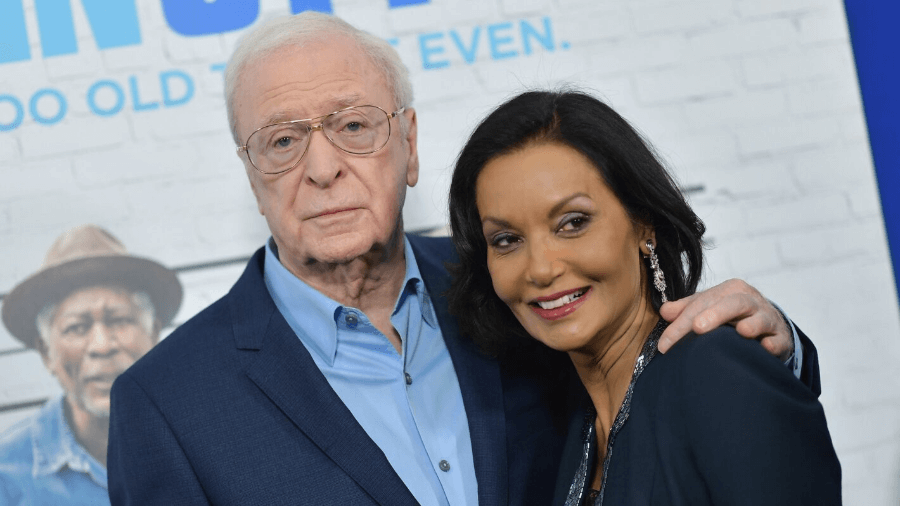
Although Shakira stepped back from professional entertainment, she never vanished completely. Over the years, she has appeared at select public events, charity functions, and premieres alongside Michael Caine.
However, these appearances followed a consistent pattern. She showed up for meaningful moments, not for constant visibility. Consequently, each appearance reinforced her mystique rather than diluting it.
In an age of relentless self-promotion, that approach feels increasingly rare.
Why Shakira Caine still captures attention
Several factors explain why public interest in Shakira Caine persists. First, she represents a form of elegance associated with an earlier era of celebrity. Second, her multicultural background adds depth to her story. Third, her long marriage provides continuity in an industry defined by volatility.
Additionally, her restraint invites curiosity. Because she never shared everything, audiences still want to know more. Ironically, privacy became part of her legacy.
Like many public figures, Shakira Caine appears across countless online “bio” pages. Many of these lists detailed personal information without reliable sourcing. As a result, misinformation spreads easily.
Therefore, responsible coverage relies on reputable profiles, film credits, and documented interviews. It avoids speculative claims about wealth, health, or private routines.
Ultimately, not knowing everything about a person does not diminish their story. In Shakira’s case, it enhances it.
Legacy and cultural significance
Shakira Caine’s legacy spans multiple identities. She is a former Miss World finalist, a successful model, a film actress, and a partner in one of entertainment’s most enduring marriages. Yet none of those labels fully capture her significance on their own.
Her real influence lies in how she navigated fame. She embraced opportunity, then stepped back when it no longer served her. She remained visible without surrendering privacy. She supported a public partnership while retaining personal independence.
In doing so, Shakira Caine modeled a quieter form of success—one built on choice, balance, and self-definition. That approach continues to resonate, which explains why her name still draws interest decades later.
Ultimately, her story reminds us that visibility is not the same as impact. Sometimes, the most lasting presence comes from knowing when to step forward—and when to step away.