📑Table of Contents:
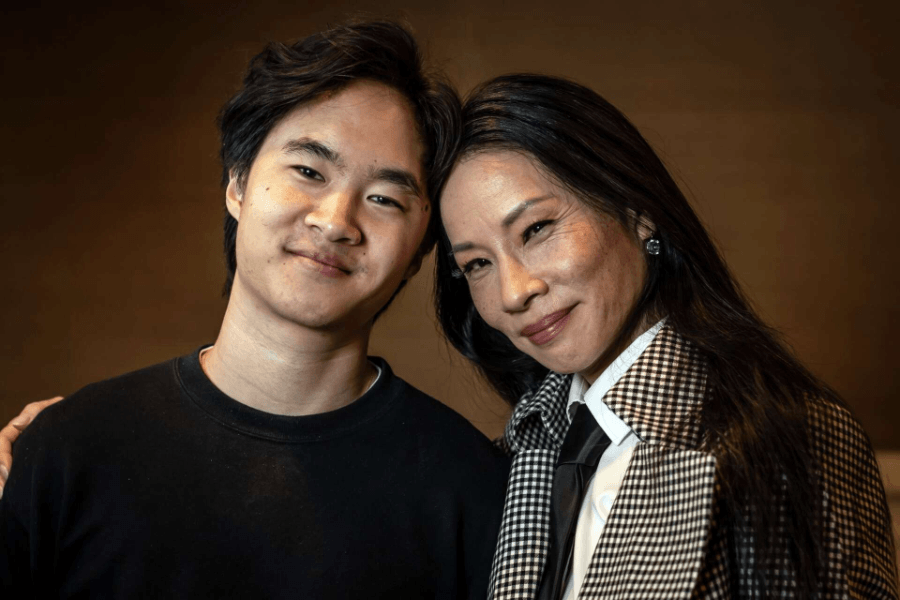
Lucy Liu has built one of the most distinctive careers in modern entertainment. While many actors become known for one breakout role and spend years trying to escape it, Liu has done something far more difficult. She has created a career defined by range, discipline, and reinvention. As a result, she remains one of the most recognizable and respected figures in film and television.
Moreover, Lucy Liu’s importance goes beyond fame alone. She changed what visibility could look like for Asian American women in Hollywood. She entered an industry that often offered limited, stereotyped roles, and yet she carved out space through intelligence, precision, and unmistakable screen presence. Therefore, her story matters not only because of what she achieved, but also because of what her career made possible for others.
Early Life And Academic Roots
Lucy Liu was born in Queens, New York, to Chinese immigrant parents. She grew up in a bilingual household, which helped shape both her worldview and her sense of identity. That background later became a quiet but important part of her public presence. Rather than fitting into a narrow industry mold, Liu often seemed to carry a broader perspective into her work.
Her path to acting did not begin as a simple fame story. Instead, she built a strong academic foundation before fully committing to performance. After attending Stuyvesant High School, she studied first at New York University and later at the University of Michigan, where she earned a degree in Asian languages and cultures. Consequently, she entered the entertainment world with a level of intellectual grounding that continues to distinguish her public image.
That foundation matters because Liu has never come across as accidental. Even early in her career, she projected focus and self-possession. While many performers are introduced to the public by image alone, Liu has always carried the impression of someone who thinks several steps ahead.
The Breakthrough That Changed Everything
Lucy Liu’s breakthrough came in the late 1990s, changing the trajectory of her career. Her performance as Ling Woo on Ally McBeal brought her national attention and quickly turned her into one of television’s most memorable supporting stars. Ling was sharp, intimidating, funny, and impossible to ignore. More importantly, Liu played the role with a precision that made the character feel alive rather than gimmicky.
Because of that performance, audiences began to see what made Liu different. She could command a scene without asking for it. She could deliver comedy with perfect timing, yet she could also project authority and danger almost instantly. Therefore, her rise did not feel like a passing trend. It felt earned.
Additionally, Ally McBeal helped establish Lucy Liu as a performer who could take a supporting role and make it culturally central. That ability would become one of the strongest patterns in her career.
Film Stardom And Mainstream Recognition
After television introduced Liu to a wider audience, film turned her into a global star. Her role in Charlie’s Angels placed her firmly in blockbuster territory, and the film showcased a different side of her appeal. She looked stylish and poised, of course, but she also brought athleticism, wit, and cool control to the role of Alex Munday.
Then, with Kill Bill: Vol. 1, Liu delivered one of the most iconic performances of her career. As O-Ren Ishii, she fused elegance with menace and transformed a stylized revenge epic into something even more unforgettable. The performance worked because Liu understood tone so well. She could play larger-than-life material without losing emotional credibility. Consequently, O-Ren became one of the defining antagonists of early-2000s cinema.
These roles also mattered culturally. At a time when Hollywood still offered few complex roles to Asian and Asian American actresses, Liu played characters who were powerful, stylish, and central to the story. Although representation in that era remained imperfect, her success visibly pushed the industry forward.
A Career Defined By Range
One reason Lucy Liu has lasted so long is that she never allowed her career to harden into a single type. She could do action, but she could also do drama. She could play icy control, but she could also deliver warmth, vulnerability, and humor. As a result, her filmography feels expansive rather than repetitive.
That versatility showed clearly in Chicago, Lucky Number Slevin, and later in voice work that introduced her to younger audiences. She voiced Viper in the Kung Fu Panda franchise and Silvermist in Disney’s Tinker Bell films, proving that her presence could translate just as strongly through animation. Meanwhile, her role as Joan Watson in Elementary revealed another layer of her talent.
Elementary And The Art Of Maturity
If Ally McBeal made Lucy Liu famous, Elementary reminded audiences just how deep her skill set runs. Her version of Joan Watson could have been overshadowed by the show’s Sherlock Holmes premise. Instead, Liu helped turn Watson into the emotional and intellectual center of the series.
She played the character with calm authority, empathy, and quiet strength. Rather than chasing easy drama, she built Joan gradually. Therefore, the performance felt mature, grounded, and deeply watchable over time. In many ways, Elementary showed what happens when an actor known for style and force is given space to explore steadier emotional textures.
Moreover, the role carried symbolic importance. Reimagining Watson as a woman could have felt like a superficial twist. Liu made it feel essential.
More Than An Actor
Lucy Liu’s career also stands out because it extends beyond acting. Over the years, she has directed television, produced projects, and developed a respected practice as a visual artist. That broader creative life helps explain why she has remained so compelling. She has never seemed satisfied with occupying only one lane.
Additionally, her work as an artist reveals an important aspect of her identity: she values authorship. She does not simply appear inside stories created by others. She also builds, shapes, and interprets the world through her own lens. Consequently, her career feels fuller than the résumé of a typical screen star.
Recent recognition has reinforced that legacy. Career honors and festival attention have highlighted not only her longevity, but also the fearless variety of her work across media. That kind of recognition matters because it places Liu in the category she has long deserved: not just a successful actor, but a lasting artist.
Why Lucy Liu Still Matters
Lucy Liu still matters because she represents a rare combination of talent and endurance. She broke through in an industry that often resisted complexity, especially for women of color. Then, instead of fading after a few signature roles, she kept expanding. She moved between television and film, between live action and voice work, between performance and visual art.
Furthermore, she changed the expectations around who could lead, who could intimidate, who could be funny, and who could be unforgettable. Her influence is visible not only in her own body of work but also in the broader entertainment landscape that followed.

Final Thoughts
Lucy Liu’s story is not just a success story. It is a story of persistence, evolution, and cultural impact. She built a career through intelligence, range, and unmistakable presence, while helping to reshape Hollywood’s imagination. That alone would make her important. However, what makes her truly remarkable is that she never stopped growing.
Ultimately, Lucy Liu endures because she offers more than star power. She offers substance. And in an industry that often confuses visibility with value, that may be her most impressive achievement of all.