📑Table of Contents:
- Adam Sandler as Happy Gilmore
- Christopher McDonald as Shooter McGavin
- Julie Bowen as Virginia Venit
- Frances Bay as Happy’s Grandmother
- Carl Weathers as Chubbs Peterson
- Ben Stiller as Hal L.
- Supporting Cast and Familiar Faces
- The Golf World Characters
- Cast Chemistry and Comedic Timing
- The Cast and 1990s Comedy Style
- Cultural Impact of the Happy Gilmore Cast
- Why the Cast Still Matters Today
- Conclusion
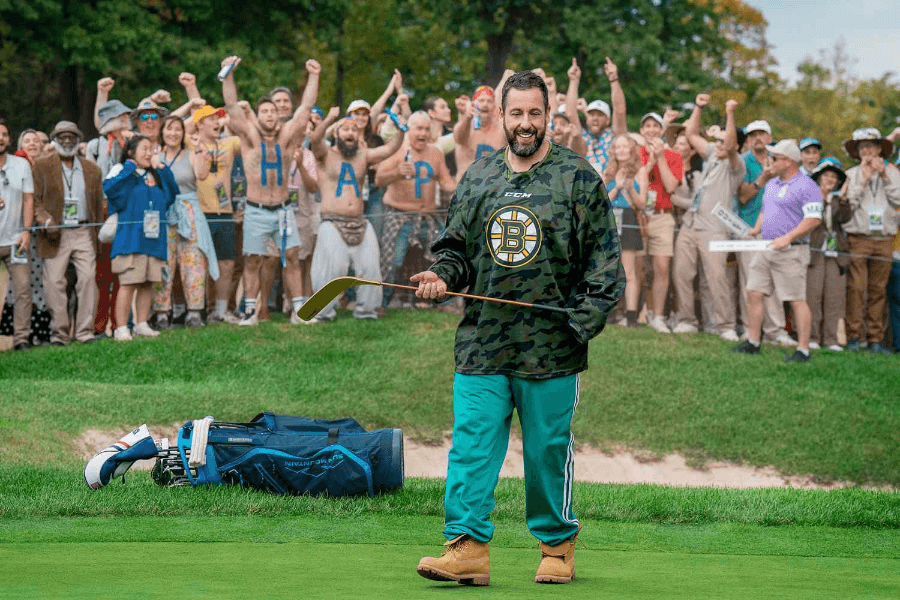
Happy Gilmore is more than a loud sports comedy. However, its lasting popularity stems from the cast, which is fully committed to its absurd tone. While the premise sounds ridiculous on paper, the performances give it structure, heart, and rhythm. Consequently, the cast transformed a simple underdog story into a film that still resonates decades later.
Moreover, the movie arrived at a turning point in 1990s comedy. Adam Sandler was defining his screen persona, and the supporting cast amplified that identity instead of competing with it. Therefore, when people search for the Happy Gilmore cast, they are really searching for the reason the movie still works.
This in-depth article breaks down the main cast of Happy Gilmore, explains why each performance matters, and explores how the ensemble created a timeless comedy.
Adam Sandler as Happy Gilmore
Adam Sandler plays Happy Gilmore, a failed hockey player with explosive anger issues and a freakishly powerful golf swing. From the opening scenes, Sandler establishes the film’s tone. He moves fast, yells often, and leans heavily into physical comedy. However, he also gives Happy emotional motivation.
Happy isn’t chasing fame. Instead, he wants to save his grandmother’s house. Because of that goal, his rage feels purposeful rather than random. Sandler balances childish tantrums with genuine desperation, which keeps the character likable.
Additionally, Sandler’s physicality defines the role. His running golf swing, exaggerated facial expressions, and sudden outbursts become the movie’s signature. As a result, Happy Gilmore became one of the most recognizable comedy characters of the decade.
Christopher McDonald as Shooter McGavin
Christopher McDonald delivers one of the greatest comedy villains ever as Shooter McGavin. While many antagonists fade into the background, Shooter dominates every scene he enters. Moreover, McDonald plays him with complete seriousness, which makes the arrogance even funnier.
Shooter represents everything Happy hates about golf: elitism, fake politeness, and entitlement. However, McDonald pushes the character beyond realism into memorable absurdity. His obsession with tradition, his tantrums, and his desperate need for approval all add layers.
Because McDonald commits fully, Shooter becomes iconic. Consequently, fans still quote him, meme him, and recognize him instantly decades later.
Julie Bowen as Virginia Venit
Julie Bowen plays Virginia Venit, a PGA Tour publicist who sees Happy’s commercial potential. Although her role is calmer than most, it plays a crucial part in grounding the story.
Virginia acts as the bridge between Happy’s chaos and the structured golf world. Additionally, Bowen avoids exaggeration, which helps balance the film’s energy. She reacts realistically to absurd situations, making them feel funnier by contrast.
Moreover, her relationship with Happy never overwhelms the plot. Instead, it adds warmth without slowing the pacing. Therefore, Bowen’s performance supports the story without distracting from its momentum.
Frances Bay as Happy’s Grandmother
Frances Bay portrays Happy’s grandmother, the emotional core of the film. Although she appears in limited scenes, her presence motivates every action Happy takes.
Bay plays the character with warmth and sincerity. She never pushes for excessive sentimentality. Instead, her calm demeanor contrasts with Happy’s explosive nature. Because of that contrast, their bond feels genuine.
Furthermore, the threat of losing her home gives the story stakes. Without her character, the movie would rely purely on gags. Therefore, Bay’s performance quietly anchors the film.
Carl Weathers as Chubbs Peterson
Carl Weathers delivers one of the most beloved performances in Happy Gilmore as Chubbs Peterson. As Happy’s mentor, Chubbs provides discipline, wisdom, and dry humor.
Weathers brings authority to the role, yet he embraces the film’s absurdity. His missing hand backstory becomes one of the movie’s most memorable running jokes. However, Chubbs also represents growth and restraint.
The dynamic between Chubbs and Happy works because of contrast. Chubbs stays calm while Happy loses control. As a result, their scenes combine humor with progression.
Ben Stiller as Hal L.
Ben Stiller appears briefly as Hal L., the abusive nursing home orderly. Despite limited screen time, his performance leaves a lasting impression.
Stiller exaggerates cruelty to cartoonish levels. However, the exaggeration fits the movie’s tone perfectly. His character becomes a symbol of everything Happy fights against beyond golf.
Additionally, Stiller’s appearance adds surprise. His scenes feel sharp and aggressive, which enhances the payoff later in the film. Consequently, this small role punches far above its weight.
Supporting Cast and Familiar Faces
The Happy Gilmore cast includes several actors who frequently appear in Adam Sandler’s films. Allen Covert, Dennis Dugan, and other familiar faces populate the background with quirky characters.
These roles may seem minor, but they add texture. Each character reinforces the film’s exaggerated world. Moreover, their presence creates a sense of continuity within Sandler’s comedic universe.
Because of this familiarity, the film feels cohesive rather than random.
The Golf World Characters
The golfers, commentators, and officials serve an important function. They represent the rigid, traditional culture Happy disrupts.
Each reaction shot, scandalized expression, and rule-obsessed rant highlights how out of place Happy is. Therefore, even characters with minimal dialogue contribute to the humor.
The cast treats these roles seriously, which strengthens the contrast. As a result, Happy’s behavior feels even more chaotic and funny.
Cast Chemistry and Comedic Timing
One of the biggest reasons Happy Gilmore endures is the chemistry of the cast. Every performance aligns with the same exaggerated tone.
No one underplays their role, yet no one breaks the internal logic. Because of that balance, the comedy flows naturally. Scenes move quickly, jokes land cleanly, and momentum never stalls.
Additionally, the actors understand timing. Punchlines hit without dragging. Physical gags unfold with precision. Therefore, the film maintains energy from start to finish.
The Cast and 1990s Comedy Style
The Happy Gilmore cast perfectly reflects 1990s comedy sensibilities. Loud characters, physical humor, and clear villains defined the era.
However, what sets this film apart from forgettable comedies is its commitment. The actors never apologize for the absurdity. Instead, they lean into it fully.
Because of that commitment, the humor aged well. Rather than feeling outdated, it feels intentionally exaggerated.
Cultural Impact of the Happy Gilmore Cast
The cast created characters that outlived the movie. Shooter McGavin became a pop culture reference. Chubbs became a fan favorite. Happy Gilmore became shorthand for chaotic confidence.
This level of cultural staying power requires more than jokes. It requires characters that people remember. Therefore, the cast deserves credit for the film’s long-term success.
Why the Cast Still Matters Today
Decades later, people still rewatch Happy Gilmore. They quote lines. They share clips. They introduce it to new audiences.
That longevity exists because the cast created something distinct. Each character feels specific, exaggerated, and confident. As a result, the film never blends into the background.
In an era where many comedies age quickly, Happy Gilmore stands out.

Conclusion
The Happy Gilmore cast turned a ridiculous premise into a comedy classic. Adam Sandler led with explosive energy. Christopher McDonald delivered an unforgettable villain. Carl Weathers brought heart and discipline. And the supporting cast filled the world with memorable personalities.
Moreover, every actor understood the tone and committed fully to it. Because of that commitment, the movie remains funny, quotable, and culturally relevant.
Ultimately, when people talk about Happy Gilmore, they’re really talking about the cast. And that cast is the reason the film still swings so hard today.